Ship Or Die is a choice among four acquisition lanes: short-form content, SEO, Meta ads, and viral launch videos. It becomes useful only when you can match one lane to a real offer, destination, budget, or production capacity.
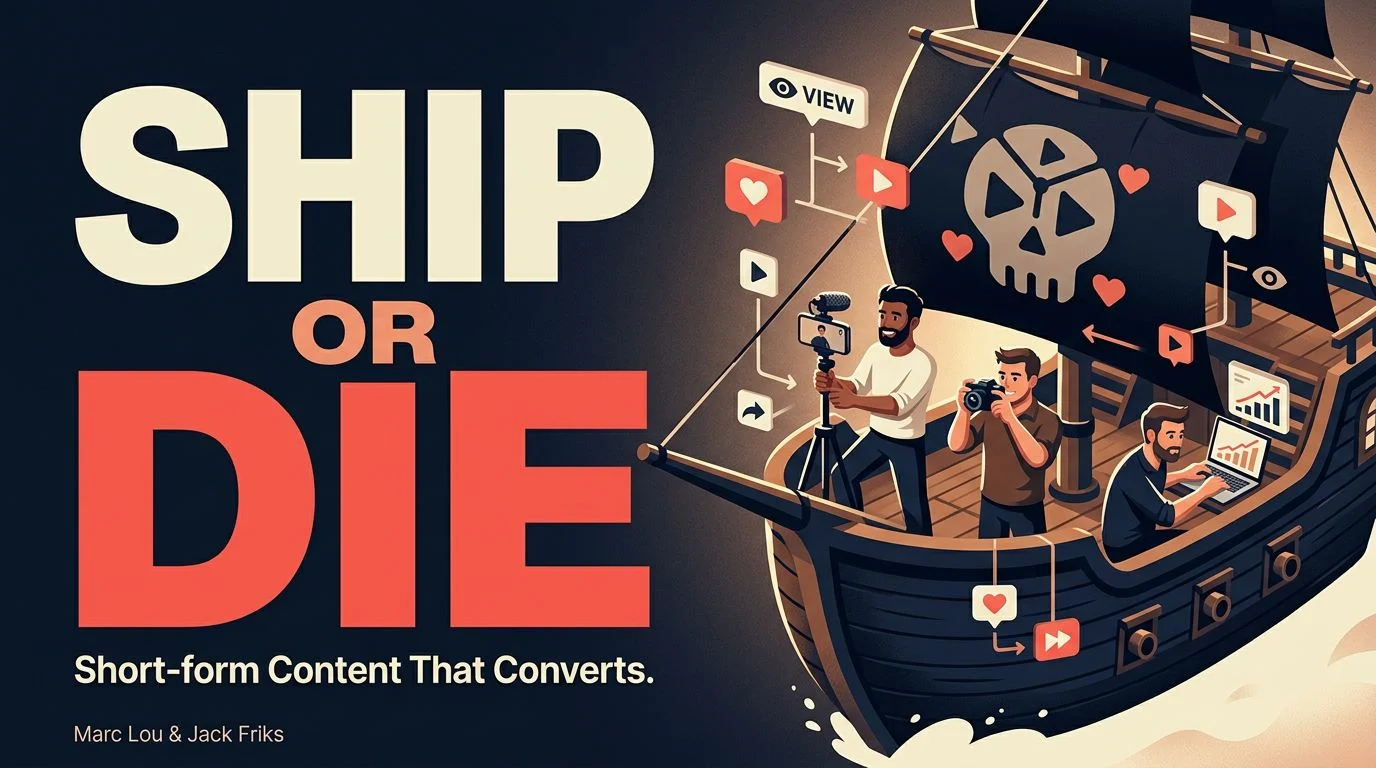
What the Ship Or Die marketing course makes you choose
The visible Course Content tree lists 27 folders and 210 files across video, PDFs, a spreadsheet, and documents. Its branches map to four jobs: short-form attention, search discovery, paid Meta reach, or launch creative. That makes it a channel-selection library rather than a universal growth recipe.
The provider presents the corresponding program as four courses paired with a mission and says application needs something real to send people to. A landing page, waitlist, app page, free tool, checkout, or similar destination gives channel work somewhere to go. The listing verifies files, not the provider’s mission, proof checks, community, feedback, or platform services.
SEO is a page-and-measurement commitment
In the provider’s published SEO curriculum outline, Search Console and crawlability lead into intent, landing pages, content, links, and AI-search topics. That order frames search as a feedback loop between what people look for, what a site publishes, and what performance data reveals—not a keyword list.
A buyer with owned pages and the ability to revise them may find product-led organic traffic a sensible lane. Once those basics are in place, SEO writing practice is a more focused next step than trying to expand into every channel at once. Someone without a site, target query, or way to watch search performance should not expect SEO material alone to create immediate demand. No lesson or resource was opened, so depth and current usability remain unknown.
Meta ads begin before account setup
The provider describes its Meta sequence as economics, cashflow, persona, and funnel design before account setup, followed by creative, campaign structure, budgets, KPI analysis, and action. That is a useful constraint: paid acquisition is presented as an experiment around a defined offer and conversion path, not a button-clicking exercise.
For a founder with test funding and a measurable route from click to action, funnel measurement and campaign analytics help decide whether this lane is ready. Before paying for reach, landing-page conversion practice can reveal whether the offer and page are ready for paid traffic. Without an offer, budget, or appetite for iteration, Meta work is likely premature. Nothing in the listing establishes campaign approval, account safety, views, customers, or revenue outcomes.
Viral launch videos demand production, not just ideas
The target tree visibly includes script, shooting, editing, publishing, and breakdown-related folders in its launch-video branch. The provider’s outline likewise moves from movie-scene selection and scripting through shooting, editing, publishing, and breakdowns. Together, that points to a creative-production workflow rather than a purely strategic lesson.
That route fits a founder or small team prepared to make and edit footage. It is a poor fit for someone who wants positioning advice without asset production. Buyers must independently check copyright, licensing, advertising rules, and platform policies for any third-party media they intend to use.
Questions about the Ship Or Die files and official extras
What is visibly included in Ship Or Die?
The Course Content surface shows 27 folders, 210 files, 4.71 GB, and video, PDF, spreadsheet, and document formats. Individual files were not opened, so playback, readability, worksheet function, completeness, and update status are not confirmed.
Which marketing channels does the library represent?
The visible top-level folders are Short-form Content, SEO, Meta Ads, Viral Launch Videos, and More marketing resources. The official provider also describes short-form, SEO, Meta ads, and viral launch videos as its four core channel courses.
Do I need a product before using it?
The provider says its marketing mission is intended for a product or destination people can reach, such as a landing page, waitlist, app page, free tool, or checkout. That makes the material more actionable when you already have an offer to test.
Is the Meta material only account setup?
No—the provider says its outline begins with economics, cashflow, persona, and funnel work before setup, then moves into creatives, campaigns, budgets, and KPI analysis. This describes the provider’s program and does not verify the depth of every target file.
Does it include the official mission or community?
That is not verified for this listing. The provider distinguishes its library from its mission, proof checks, and community services, so buyers should not assume those official-platform features are part of the file collection.
Turn one channel into a testable first sprint
Pick the lane that matches a current constraint: search when you can publish and measure pages; Meta when an offer and test budget are ready; short-form when a product needs repeatable attention; or launch video when you can produce assets. If the bottleneck is a page that does not convert, landing-page conversion practice should come before adding another traffic source.
A self-directed builder with a concrete destination can turn the library into a bounded experiment. A buyer seeking accountability, a finished offer, hands-off execution, or guaranteed results will still be missing work the files cannot supply.