TL;DR: Print School 2.0 is Polly Payne’s five module program on manufacturing physical printed products, launched in June 2022. It covers print language, ideation, design specs, overseas sampling and three fulfilment models, plus group coaching calls, printing partner access, design templates and an InDesign and Canva course.
What Print School Actually Teaches
Polly Payne founded Horacio Printing in 2014 after working in advertising technology in New York. She had no paper or printing background at all. The company became known for its Dream Planner Bible studies and journals, and she now hosts The Dream Printing Podcast. Enough people asked how the products were physically made that she built a course around the answer.
She calls it the dream printing method. Strip the branding away and it is a production workflow: how to speak to a printer, how to turn a rough idea into a functional prototype, and how to get a real quote back instead of a guess. That framing matters, because it sets this apart from almost everything else in the category.
How Print School Compares To The Print On Demand Category
Most self publishing and print on demand courses teach one motion. You format a file, upload it to a marketplace, and someone else prints and ships when an order lands. It is low risk and it works, but you never touch paper weight, binding, foil, or a factory. You are renting someone else’s supply chain.
Print School 2.0 goes the other direction. It assumes you want to own the product: pick the materials, set the specs, order a sample, negotiate with a printer, and decide how boxes get from a warehouse to a customer. That is a genuinely different skill set, and it is the strongest argument for this program over the cheaper end of the category.
Inside The Five Modules
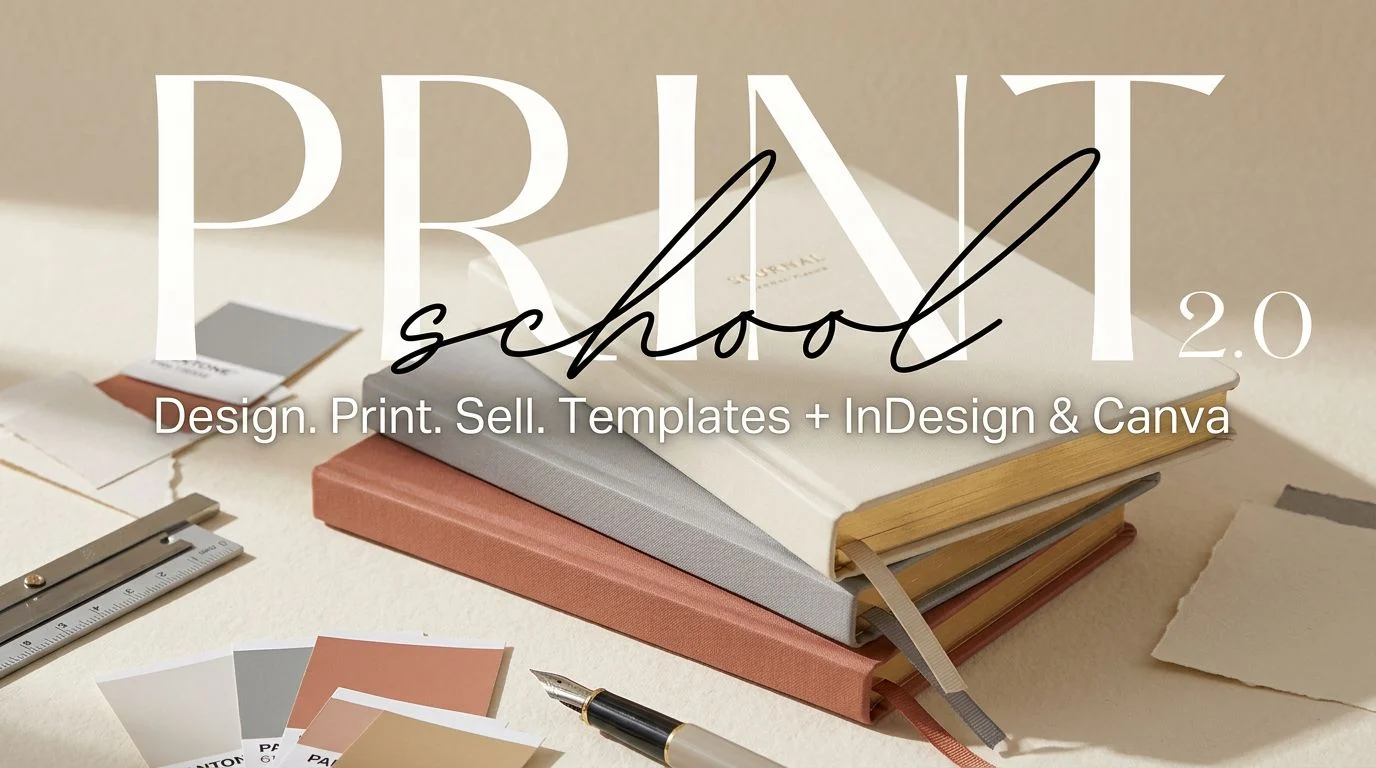
Module 1 covers the language of print and realistic project timelines. Module 2 handles ideation: taking an idea to a functional prototype choosing materials, and requesting a first quote. Module 3 is design, meaning specs, materials, style, size and project management.
Around the modules sit group coaching calls, access to her preferred printing partners, design templates, and a separate InDesign and Canva design course. The printing partner list is the sleeper asset. Sourcing a printer you trust is usually the slowest part of the whole exercise.
Where Print School Falls Short
It is narrow. This is aimed squarely at physical printed goods such as planners, journals and devotionals, not general publishing, not ebooks, not Amazon KDP strategy. If you want a marketplace listing workflow, this is the wrong shelf.
It also assumes you are willing to deal with manufacturers, minimum order quantities and holding inventory. That is a real capital and logistics commitment, and no course removes it. And the product examples lean faith adjacent because they come from her own catalogue, which will not match everyone’s brand. Anyone manufacturing goods should also read the FTC guidance on complying with the Made in USA standard before printing labels.
Print School 2.0: Common Questions Answered
Is Print School 2.0 legit?
Yes. Polly Payne is a verifiable operator, founder and CEO of Horacio Printing since 2014 and host of The Dream Printing Podcast. She reports hundreds of students have gone through the program since the 2.0 release in June 2022.
Do I need design experience?
No. The included InDesign and Canva course exists precisely because most people arrive without it, and module 3 walks the spec side.
Does this work for non faith products?
The method is product agnostic. The examples are not. You will be translating planner and devotional case studies to your own category.
Is this the same as print on demand?
No, and that is the point. Print on demand outsources production. This teaches you to commission it yourself.
How current is the material in 2026?
Print specs, materials and fulfilment models age slowly. The 2022 build still tracks, though printer quotes and shipping conditions have shifted since.
Is Print School 2.0 Worth It?
If you are set on making a real printed product and you accept the inventory reality that comes with it, this is one of the few programs in 2026 that teaches the manufacturing side rather than the upload side. If you are testing an idea and want zero commitment, stay with print on demand. Print School is for the person who already decided to build the thing.