TL;DR: Low-Ticket Launchpad is Dickie Bush and Nicolas Cole’s system for turning what you already know into small digital products that sell on repeat. The two co-founded Ship 30 for 30, which they say has passed 10,000 graduates. Expect a build-launch-scale curriculum, not a course library you skim once.
What Low-Ticket Launchpad Walks You Through
The premise is simple: most creators overthink their first offer. This program pushes the opposite habit. Package one useful thing, price it low, ship it fast, then improve it. The curriculum moves through finding an idea worth selling, shaping it into a tight offer, and putting it in front of an audience without a giant funnel behind it. It leans on speed and consistent action over polish.
Who Dickie Bush and Nicolas Cole Are
Dickie Bush and Nicolas Cole co-founded Ship 30 for 30, one of the larger cohort-based online-writing programs, which they describe as having crossed 10,000 graduates. Between their own products and courses, they report substantial digital product sales. Take the revenue figure as their claim rather than a fact we verified.
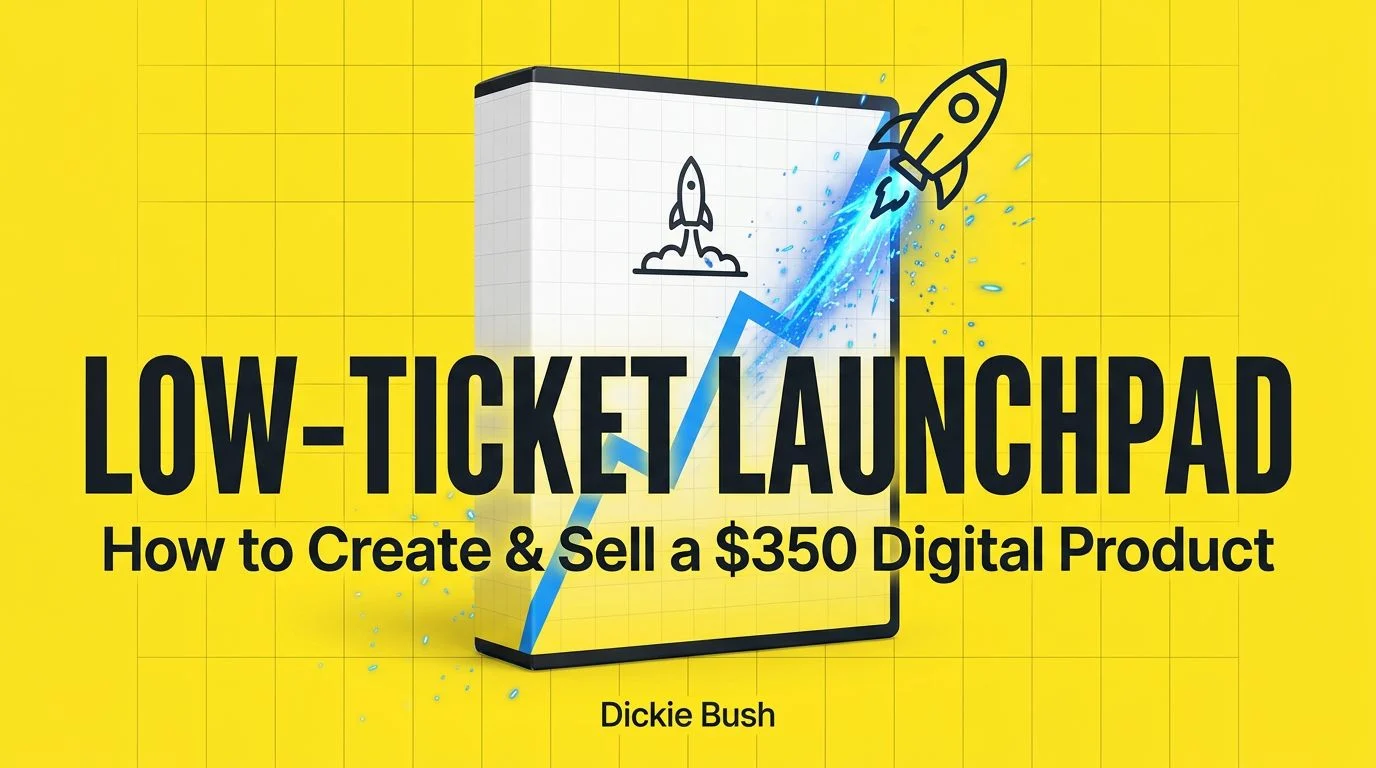
Inside the System: Building and Launching Low-Ticket Offers
The core of Low-Ticket Launchpad is a repeatable method for creating and launching small digital products. The worked example throughout is a low ticket product, which they use to show positioning, packaging, and the launch mechanics that get a first sale in.
Who Low-Ticket Launchpad Is For
This is built for creators, writers, and solopreneurs who already have knowledge worth packaging and just need a faster path to shipping it. If you have been sitting on an idea for months, the structure here forces a decision. It is not for people who want a done-for-you product handed over, and it is not a shortcut around actually publishing. You still have to write, launch, and talk to your audience.
How It Compares to High-Ticket Course Launches
High-ticket launches usually mean webinars, sales calls, long nurture sequences, and a lot of pressure on a single big number. The low-ticket approach flips that. You ship smaller, sell more often, and let volume plus repeat buyers do the heavy lifting. The trade-off is real: a low ticket offer will not replace an income overnight the way a high ticket program might in theory.
Low-Ticket Launchpad: Common Questions Answered
What is Low-Ticket Launchpad?
It is a course from Dickie Bush and Nicolas Cole that teaches how to build, launch, and scale small digital products, using a low ticket offer as the running example.
Who is the Dickie Bush course for?
Creators, writers, and solopreneurs who have knowledge to package and want a fast, low-risk way to sell it. Not for anyone expecting a product built for them.
Is Low-Ticket Launchpad worth it?
If you keep stalling before you publish, yes. The value is the launch structure and the mindset shift toward shipping small and often. If you already sell your own low ticket digital products regularly, it will feel familiar.
Is Low-Ticket Launchpad legit?
The creators are the co-founders of Ship 30 for 30 and report substantial digital product sales. Treat the revenue number as their claim, but the teaching comes from people who have genuinely done this.
Is it beginner-friendly?
Mostly, yes. You do not need an existing product, but you do need something you know well enough to teach and a willingness to publish in public.
Does Low-Ticket Launchpad promise sales?
No. There is no income promise here. It gives you the method and the frameworks; the results depend on your topic, your audience, and how consistently you ship.
Is Low-Ticket Launchpad Worth It?
Among the creator-economy programs we review, Low-Ticket Launchpad earns its place by being narrow and practical. It does not try to teach everything. It teaches one motion, build a small offer and launch it, and it teaches that motion well. The weakest case against it is that the idea is not complicated, and a disciplined self-starter could piece it together alone. The strongest case for it is that most people do not, and the packaged version from two people who have shipped repeatedly saves months of second-guessing. If you have knowledge sitting idle, this is a sensible push to finally sell it. You can read more about the wider creator economy for context on why small digital products keep growing.