
TL;DR: Colour Psychology For Creatives is Fiona Humberstone’s introduction to the colour framework she uses as The Brand Stylist, author of How to Style Your Brand and Brand Brilliance. It covers her key principles, seasonal personalities and how to build cohesive palettes that carry a brand story. An introduction, not a full identity course.
What Colour Psychology For Creatives Actually Covers
Fiona Humberstone trades as The Brand Stylist and wrote How to Style Your Brand and Brand Brilliance. She has developed hundreds of brand identities, and this is the short introduction to the thinking behind them: her key principles, the seasonal personalities she sorts brands into, and the elements that carry a palette once it is set, including pattern, texture, type and photography style. The aim is cohesion and faster, more confident decisions. You leave with a method for choosing, not a finished identity.
Where It Sits Against Other Branding Courses
Branding education in 2026 still splits two ways. One half teaches strategy in the abstract: positioning, values, audience, all useful, none of it telling you what to put on the page. The other half teaches software mechanics. The gap between them is where self-taught designers stall, rebuilding the same palette four times and unable to say why the third version is better than the first. Colour Psychology For Creatives lives in that gap. It offers a repeatable path from an intended feeling to concrete visual choices, a narrower claim than either camp makes, and a more useful one.
How The Seasonal Personalities System Works
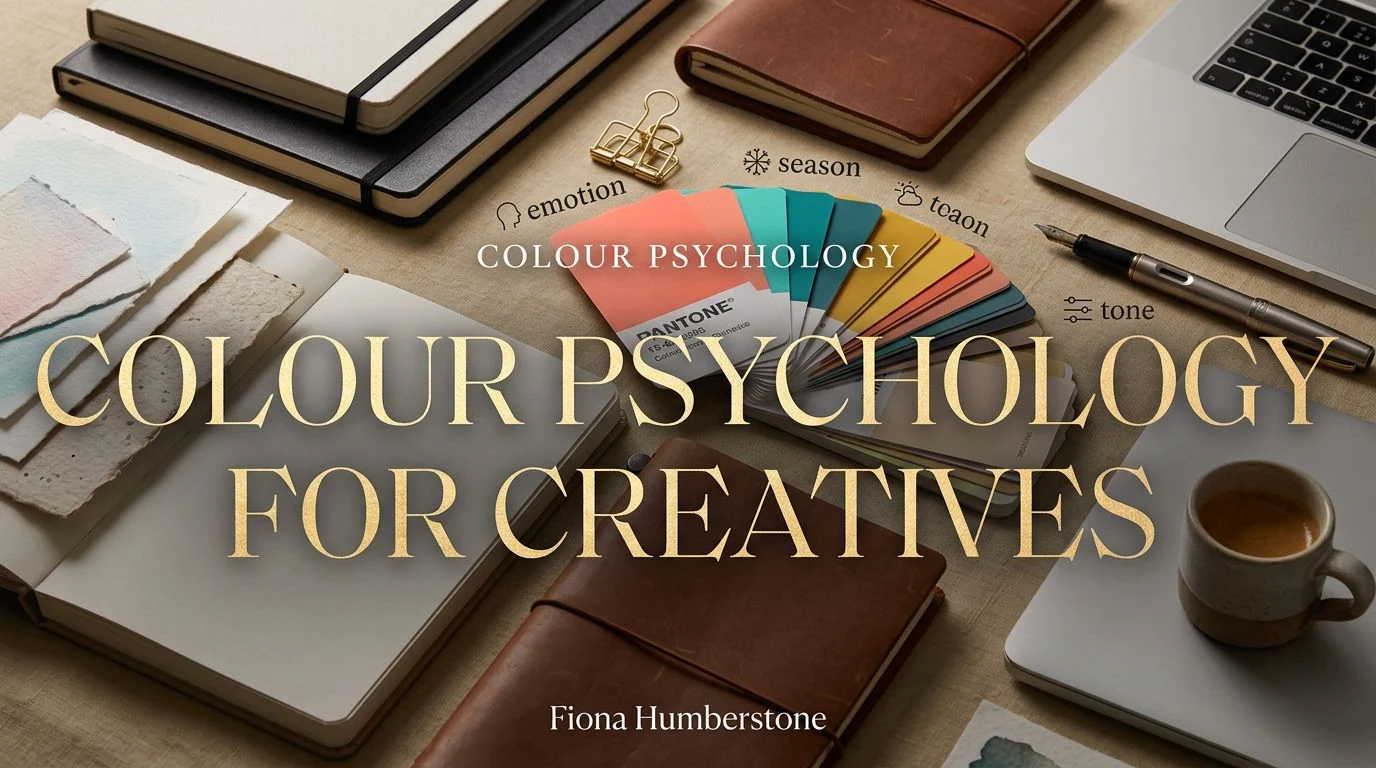
Humberstone groups brands into seasonal personalities, each carrying its own colour temperature, contrast level and supporting textures. Once a brand is placed, palette decisions narrow quickly, and pattern, type and photography choices follow the same logic. It is less about what a single red means and more about keeping every element pulling in one direction, so the finished identity reads as one idea rather than five competing ones. Building palettes that carry a brand story is the recurring exercise.
What Colour Psychology Can And Cannot Tell You
Worth being straight here. Colour psychology is a design methodology, useful as a decision tool, but not settled science. Academic support for fixed emotional responses to specific colours is limited, and most documented associations are cultural, contextual and industry-specific rather than universal laws. White reads one way in London and another in Delhi. Green in finance is not green in wellness. The Wikipedia overview of colour psychology covers how contested the evidence is. That does not make it useless. It makes it a lens that needs judgement, applied against a real brief and audience rather than read off a chart. Humberstone credits it with sharpening her studio’s decisions. That is her framing; outcomes depend on the designer and the brand.
Colour Psychology For Creatives: Common Questions Answered
Who is Colour Psychology For Creatives for?
Entrepreneurs and creatives who can already drive their tools but second-guess every palette. If you have been building identities for a decade, this will mostly confirm what you already do by instinct.
Is Colour Psychology For Creatives legit?
The framework is Humberstone’s own and her credentials are public: two widely read branding books and a long identity portfolio under The Brand Stylist. What we would not call settled is colour psychology as a science, so buy it as a design method rather than a set of laws.
Do I need design software skills first?
Some, yes. The course teaches decision-making, not tool mechanics, so basic competence in whatever you design with is assumed.
Will it win me more client work?
No course can promise that. A cohesive identity argues its own case better, but results depend on your craft, your market and the brand in front of you.
Is this a full brand identity course?
No. It is an introduction to one part of the process. Naming, logo craft, wider brand strategy and client delivery sit outside its scope.
Is Colour Psychology For Creatives Worth It?
It earns its place in our catalogue for one reason: it answers the question most branding material dodges, how you get from an intended feeling to a palette without guessing. The seasonal personalities system is one framework among several, not an industry standard, and this is an introduction rather than a full curriculum. Treat it as a decision aid you adapt with judgement and it holds up well. Treat it as a rulebook and it will not.