
Branding decisions rarely stop once an identity direction is chosen: they extend into launch planning, guidelines, and the way a team carries the work forward. The Branding Now II course is most relevant to experienced creatives who need a process that holds those decisions together, not a short lesson on making a mark or using one design tool.
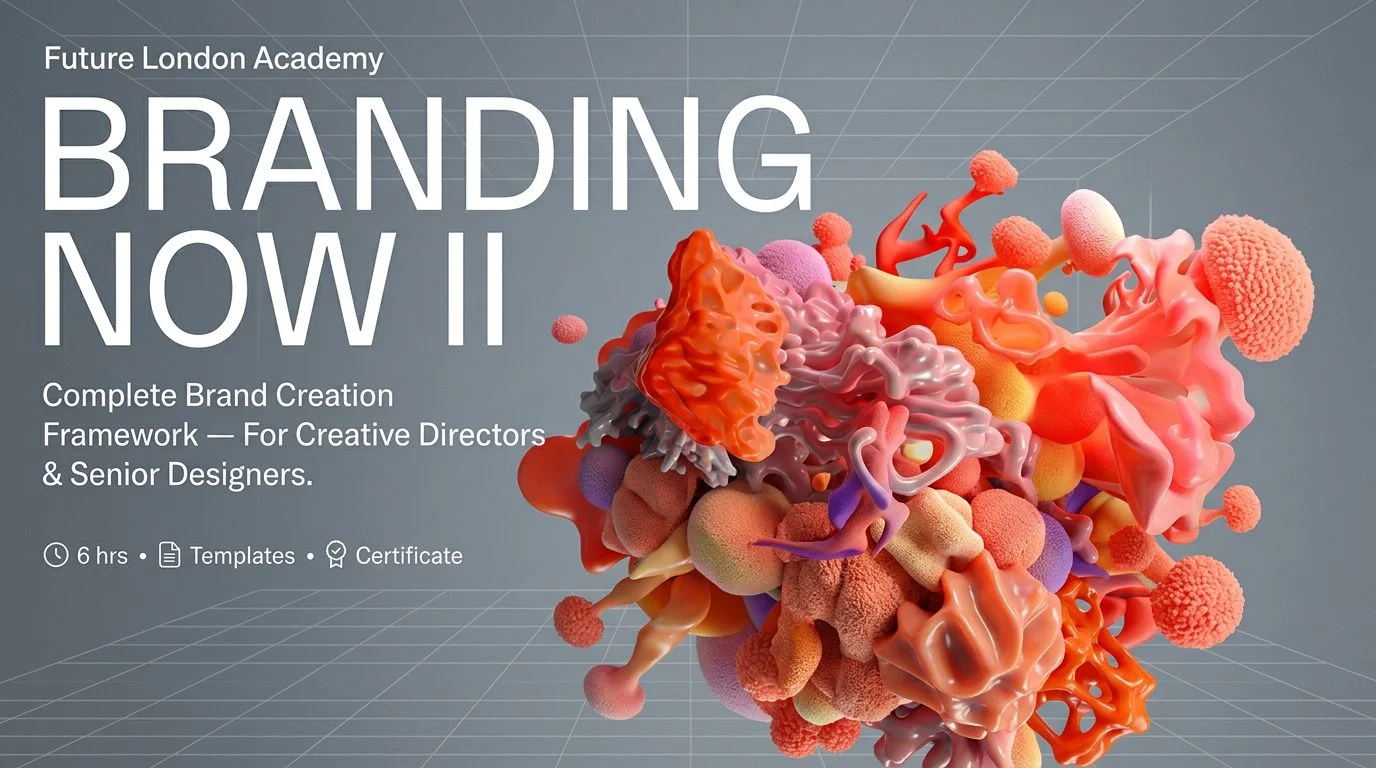
A branding process that continues past the identity system
Future London Academy’s public curriculum moves from brand story and strategy into symbol development, systems, launch, and team leadership, followed by a branding-process chapter. That sequence treats identity as one stage inside an operating process; it should suit a creative lead coordinating an initiative across people and decisions, while logo-focused training is a cleaner fit for a narrower brief.
Its published Branding Now II curriculum also names exercises, presentation PDFs, and Q&A material alongside the chapters. Those creator-stated elements make the course sound more useful as a practical framework than a portfolio of isolated inspiration, but they do not prove that the UDCourse files mirror every current official component.
Using a real brand as the course workbench
Future London Academy says the exercises can be applied to an active client, an own-brand project, or a selected practice brand. That makes the stated method a workbench for brand research and positioning, strategy choices, and later identity work: buyers with a live brief can test decisions against real constraints, while buyers without one need to build their own context instead of passively watching.
The official page positions the material for Creative Directors, Brand Managers, Senior Designers, and Design Teams. A freelancer or in-house team can use the same exercise logic, but a buyer looking for an introductory software lesson or a single logo technique may be taking on a wider working model than the task requires.
The commitment is in applying the framework, not only watching it
Future London Academy describes approximately six hours of on-demand video but estimates around ten hours for watching and completing exercises. The gap is the important number for a working buyer: the framework asks for application time, not just playback time. Treat it as planned project work rather than a quick survey watched between tasks.
The official FAQ also says formal exercise feedback is not provided. That self-directed design is a workable trade-off for learners who can bring colleagues into an internal review, and a weak fit for anyone who needs tutoring, graded submissions, or coaching to keep a branding project moving.
What the visible UDCourse package can—and cannot—confirm
The visible UDCourse package records 13 folders and 91 files—58 videos, 20 PDFs, and 13 documents—so there is a mixed-format inventory to consider. No individual asset was opened. The count can help a buyer assess package volume; it cannot confirm the subject, instructional quality, completeness, or usability of the files.
The same boundary applies to UDCourse-specific delivery details. The visible tree does not document access duration, certificate eligibility, feedback, support, updates, or a complete match with the current public curriculum. Treat those as purchase-relevant points to confirm before making them part of your implementation plan.
Branding Now II questions about project time, feedback, and package access
What formats are visibly listed for Branding Now II on UDCourse?
The visible Course Content tree lists 13 folders and 91 files: 58 videos, 20 PDFs, and 13 documents. No individual asset was opened, so the listing does not establish the lesson substance or usability of those files.
Can I apply the stated exercises to an active client or in-house brand project?
According to Future London Academy, yes: the exercises can be used with an active client, an own-brand project, or a selected practice brand. An active brief is useful, but a learner can create a practice context when no live project is available.
Why should I plan more time than the stated video runtime?
Future London Academy estimates around ten hours for watching and completing the exercises, even though it describes roughly six hours of on-demand video. The difference matters if you intend to use the framework on actual brand decisions rather than only view the lessons.
Will I receive formal feedback on the branding exercises?
Future London Academy says formal exercise feedback is not provided. A buyer who needs critique should arrange an external feedback route rather than expect tutor-marked submissions as part of the stated learning model.
Which access and support terms need separate confirmation for this UDCourse listing?
UDCourse-specific access duration, certificate eligibility, support, feedback, updates, and a match with the current public curriculum were not verified from the visible inventory. Confirm any of those terms before relying on them.