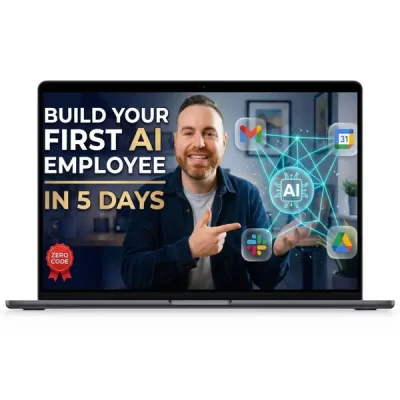
GrowOS is Wilco de Kreij’s training and workflow package for marketers and teams that want Claude Code marketing workflows to execute recurring content production. It is designed for people seeking more than chat-generated drafts because the system can connect to marketing tools, create assets, schedule posts and publish work. That final capability makes human approval central to the buying decision.
More output makes the approval queue longer
Automation pays when a task is frequent, structured and inexpensive to verify. Gathering existing material, summarising sources, reshaping one asset for another channel, drafting variations, scheduling approved content and performing mechanical image or video work all fit that description. The machine removes repetitive handling while a person retains the consequential decisions.
Truth, permission and strategic value behave differently. A model can check length, formatting, missing fields and consistency against a supplied voice profile. It is less dependable at detecting a confident false statement that arose from its own reasoning, because the checker shares the assumptions and blind spots that produced the draft. Consistent language is not verified language.
Volume exposes the asymmetry: generation scales cheaply, while careful checking still consumes human attention per item. Google’s guidance on generative AI content says producing pages at scale without added value may violate its scaled-content-abuse policy. The issue is not AI use itself. Google calls manual fact-checking critical before publication, extends that work to titles, descriptions, structured data and image alt text, and suggests explaining how content was created. Automatic publishing therefore needs a human gate put back in.
Content automation divides into distinct operating models
Assisted drafting keeps a person at the controls while a model proposes copy, outlines or variations. It is flexible and easy to supervise, but saves little coordination time when every prompt and transfer remains manual.
Template-based repurposing converts an approved source into predictable channel formats. It performs well when the source is authoritative and the output rules are stable, but repeated source errors spread everywhere.
Rule-based publishing automation moves approved assets between calendars, schedulers and accounts. Deterministic transfers are dependable, although an incorrect approval or permission setting travels just as efficiently.
Agentic computer operation lets a model choose and perform several tool actions. It can remove handoffs, but ambiguity, interface changes and excessive account permissions enlarge the failure surface.
Human-in-the-loop editorial operations automate collection, production and routing while reserving claims, exceptions and publication for accountable people. This pattern has the strongest operational logic for consequential content because automation handles repeatability without pretending judgment is free.
A safe workflow exposes its stopping points
Before buying any automation program, trace one item from source to publication. Identify where facts originate, who approves claims, which actions require confirmation and whether the system preserves an audit trail. Demand a sample run containing a bad source, an ambiguous instruction and a tool failure. A useful method should stop visibly rather than improvise silently.
Then inspect dependency risk. Ask which subscriptions, connectors and account permissions are required, how recurring costs are calculated, and whether workflows can be exported or repaired when an underlying tool changes. Finally, examine the correction loop: feedback should create testable rules or examples, not merely a promise that future output improves. Success criteria, rollback procedures and representative samples matter more than an impressive demonstration.
GrowOS runs on a tool it does not control
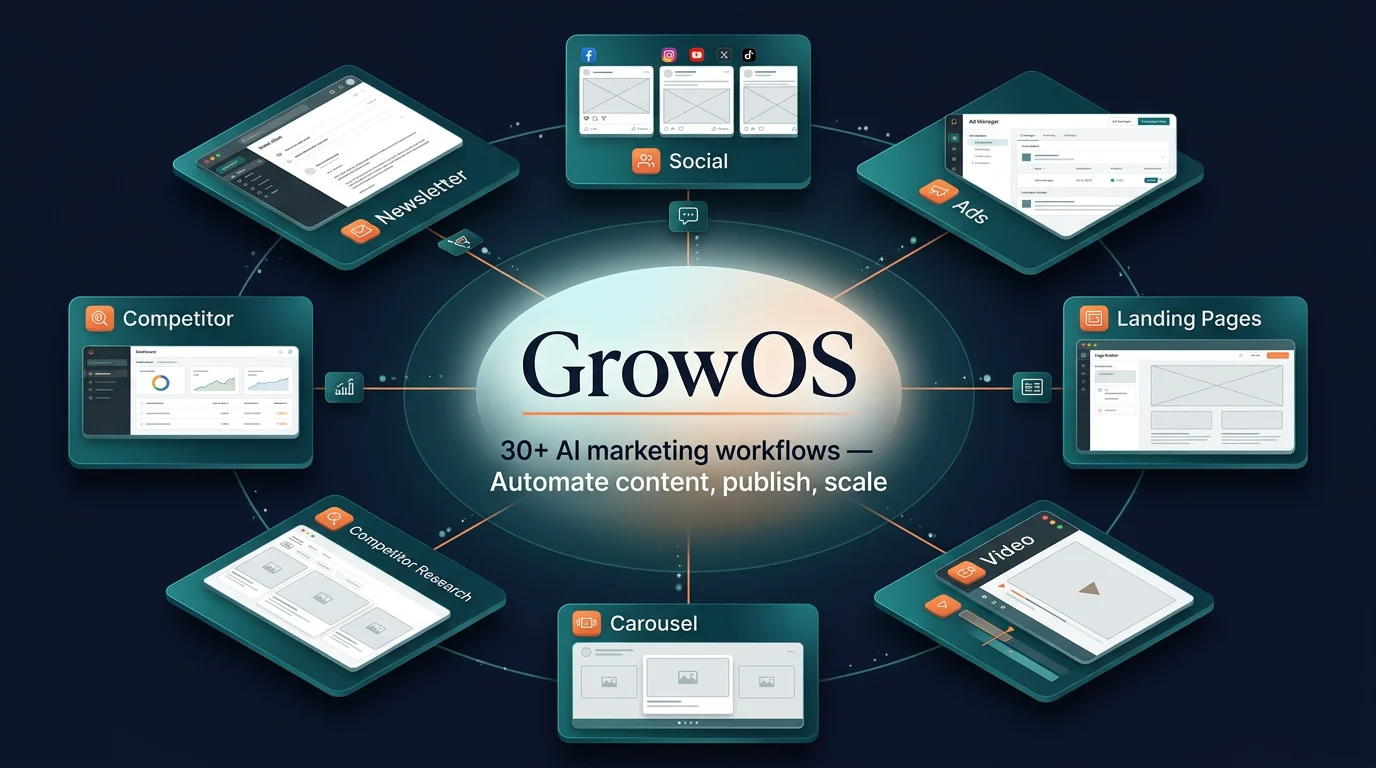
GrowOS places more than thirty prepared marketing workflows inside Claude Code. Its scope covers newsletters, social posts, advertisements with generated images, landing and sales pages, research, planning, carousels, thumbnails and mechanical video editing. A shared voice profile and feedback loop aim to keep those activities consistent across channels.
The “Run the System” track uses video walkthroughs that progress from Claude basics to publishing a first newsletter, with demonstrations and troubleshooting. “Automate Anything” teaches users to describe custom workflows in plain English without code or separate automation platforms. This makes the product a software-dependent operating course, not just a collection of prompting lessons.
That distinction carries consequences. Claude Code is a third-party dependency with its own subscription, limits and product changes, all of which the workflows inherit. Connections to email platforms, social schedulers and advertising accounts also raise permission and approval questions. Team Operations addresses assistants, permissions and handoffs, while the private Repeat Crew community provides direct access to Wilco de Kreij for three months. The listing does not say that this access is open-ended.
The listing establishes scope, not performance
The claim that workflows perform their own quality checks should be read as a capability claim, not proof that their facts or marketing judgments are correct. Likewise, learning from corrections may improve consistency without independently validating the resulting claims. For GrowOS, the listing shows no case study, and the Team Operations bonus mentions real customer implementation examples without naming any; there is no testimonial, no quantified outcome, no named user, no training duration and no lesson titles, and no statement of what community access remains after three months.
Wilco de Kreij is named as the person members can contact, but the supplied description gives no biography, company, track record or results. Its AI Stack material acknowledges recurring costs by promising a monthly operating cost breakdown, although it states no amount. Buyers should therefore judge coverage from the outline and request current evidence for performance.
The durable work starts at the publication gate
The right GrowOS buyer can invest time in source preparation, account permissions, sample testing, correction records and manual approvals. Common failures include scaling weak source material, connecting live accounts too early and treating fluent copy as publishable copy. Pair the workflows with analytics so output is judged by business consequences, not volume.
Teams chiefly missing message and offer judgment are better served by dedicated positioning training. Those blocked by distribution should compare structured paid-media operations training. Organizations making regulated or factual claims should choose specialist editorial compliance training before autonomous publishing.
The questions that decide it are about the gate and the stack
Can every publishing and upload action pause for named human approval?
Which Claude Code plan, connected services and recurring tools are required for the workflows you intend to run?
Can custom workflows and correction data be exported if the underlying tool changes?
After the stated three months, which training materials, workflow updates and community functions remain available?