TL;DR: The Hype House Blueprint is Hannah Neville’s real-estate media course covering three pillars: shooting cinematic property footage, editing clean luxury-style content, and running the business behind it. It is built for creatives, from beginners to working shooters, who want to turn a camera into a real-estate media brand in 2026.
What The Hype House Blueprint Actually Teaches
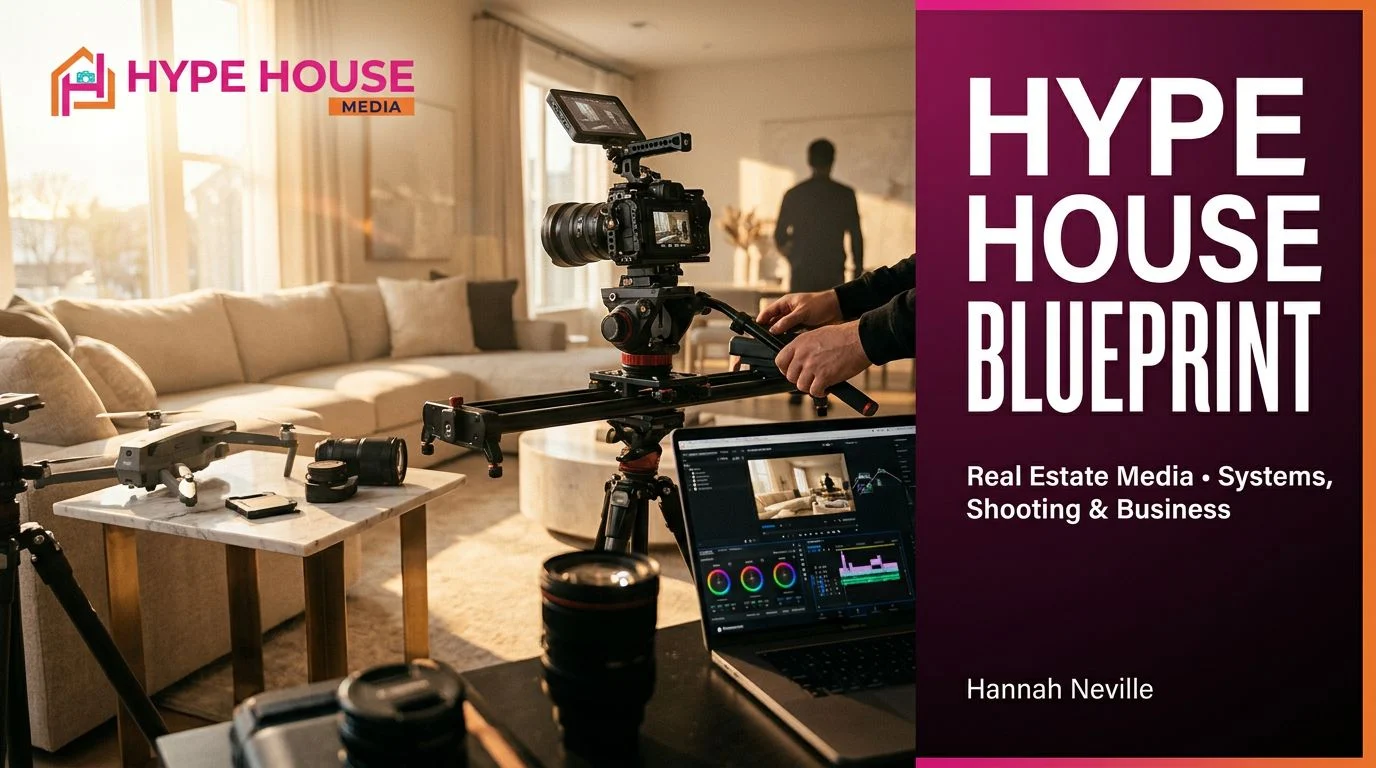
The Hype House Blueprint is a course about building a real-estate media business, not just a gear tutorial. Hannah Neville structures it around three areas: capturing property footage that looks cinematic, editing it into the clean, modern, luxury-leaning style listing agents pay for, and running the company side, pricing, client delivery, and systems. It is aimed at a specific person, a creative who owns or plans to buy a camera and wants real-estate media to become an actual income stream rather than a weekend hobby.
Who Is Hannah Neville
Hannah Neville is a Texas-based photographer and videographer working out of the Houston area. She founded Hype House Media, and before that ran Turnkey Visuals, building a media company that serves everyday agents rather than only high-end brokerages. She reports having scaled her own media business into a full operation, though that is her result from years of local work and market timing, not a promise attached to this course. What you buy is her method and workflow.
The Three Pillars, Shooting To Scaling
The shooting pillar covers composition, movement, and lighting for interiors and exteriors, the footage that makes a listing feel expensive. The editing pillar is where a lot of the value sits, turning raw clips into the polished look agents recognize and rebook for. But the business pillar is the one that separates people who own gear from people who get paid. Neville puts pricing, client delivery, and systems here, the unglamorous parts most tutorials skip. If you take one section seriously, make it this one.
Where The Hype House Blueprint Falls Short
Be honest with yourself before buying. This is narrow by design. It teaches real-estate media specifically, so if you want wedding, brand, or general video work, most of the business advice will not map cleanly. It also assumes you are willing to invest in a camera and gear and then run a service business, chasing clients, sending invoices, handling revisions. If cold outreach and pricing conversations make you want to close the laptop, the shooting lessons alone will not carry you. And nobody hands you a market.
The Hype House Blueprint: Common Questions Answered
Is The Hype House Blueprint for beginners?
Yes and no. Neville built it to work for someone starting cold as well as a shooter who already films and wants the business layer. Complete beginners will lean harder on the shooting and editing pillars first, then grow into the pricing and systems material.
Do I need expensive gear to use The Hype House Blueprint?
You need a capable camera and a willingness to keep upgrading, but the course argues, correctly, that your editing and client systems matter more to profit than the newest body. Gear is table stakes, not the strategy.
Is The Hype House Blueprint legit?
It is a real course from a working real-estate media operator with a public company behind her, not an anonymous drop. According to Bureau of Labor Statistics data on photographers, the field is competitive, so treat the training as a starting framework, not a shortcut.
How is this different from a general videography course?
Focus. Everything, from shot choice to pricing, is built around listings and agents, which is useful if that is your lane and limiting if it is not.
Will The Hype House Blueprint make me money?
No course can promise that. Neville shares the workflow that grew her own business, but results depend on your effort, your local market, and how consistently you deliver for clients.
Is The Hype House Blueprint Worth It?
If you specifically want to build a real-estate media business in 2026 and you are ready to treat it like a business, The Hype House Blueprint earns its place. The three-pillar structure is sensible, and the emphasis on delivery and pricing over gear is the right call for anyone who wants to actually get paid. If you are gear-curious but allergic to client work, or you want broader video skills, look elsewhere. This is a focused course for a focused goal, and judged on that, it holds up.