
TL;DR: Conor Harris Beginner Body Restoration is an 8-week biomechanics-led mobility program for desk-workers and beginners with posture issues or chronic stiffness. Five pillars and loaded corrective exercises in a self-paced format.
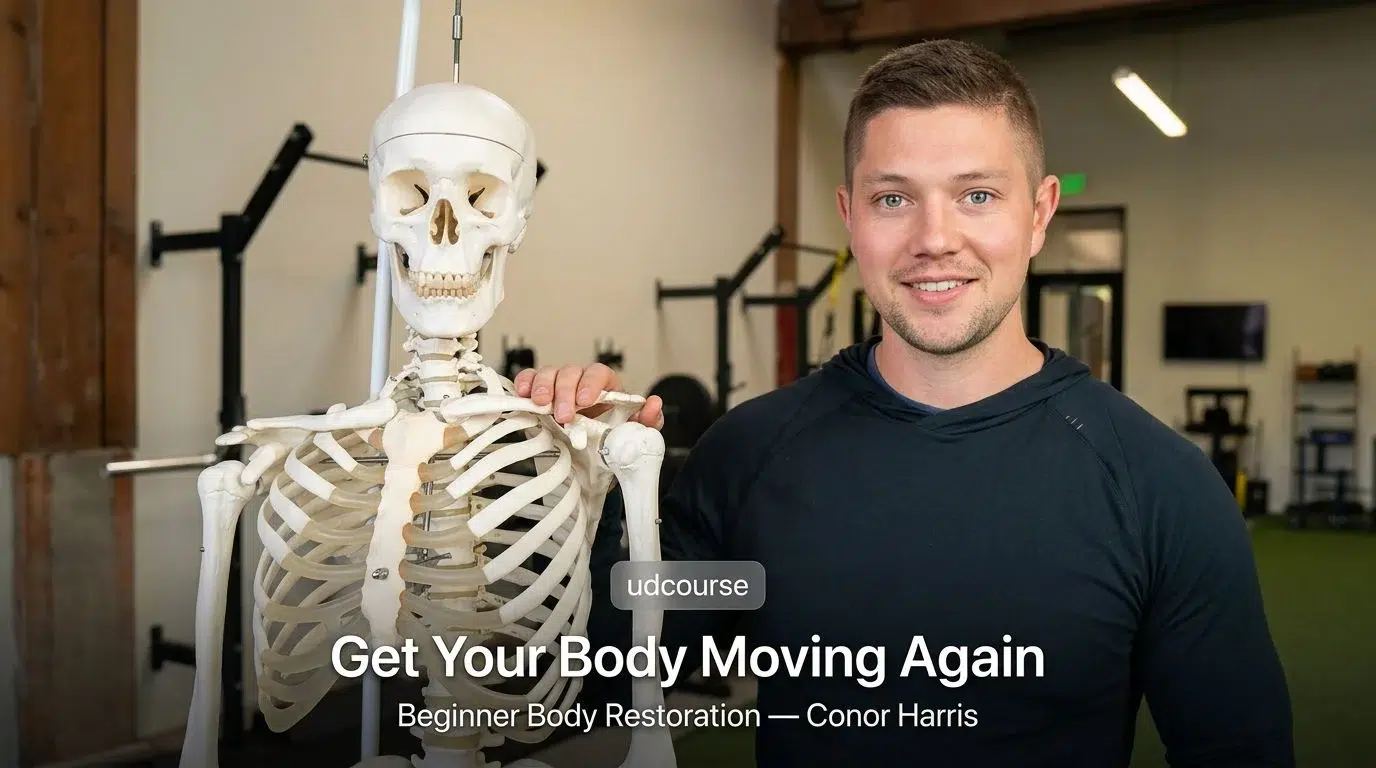
Conor Harris Beginner Body Restoration Built On Biomechanics
Most mobility content online is celebrity-trainer fluff or rehab jargon. Conor Harris sits in the narrow middle: a corrective-exercise specialist who teaches biomechanics fundamentals in plain English and structures the work for people who have never trained before. This 8-week framework supports better posture, looser hips, and steadier movement quality in bodies stiffened from years of sitting. It is biomechanics-led work, not a stretching playlist.
About Conor Harris And His Method
Conor Harris publishes at conorharris.com and runs a tiered ladder: this beginner program, a self-paced biomechanics course, and a live cohort. His framing is that surface stretching rarely fixes root cause, so the method leans on loaded corrective exercises (movement plus low-level strength stimulus) and a ground-to-upright progression that builds foundational positions before standing complexity. The principles draw from current biomechanics literature, the kind catalogued in peer-reviewed research on corrective exercise. He calls it restoration; in practice, it is a structured eight-week mobility curriculum.
What The Curriculum Covers
The program is built around five pillars across eight weeks. Posture and alignment come first: how sitting reshapes the rib cage, pelvis, and breathing pattern, and how to reposition. Mobility work targets hips, spine, shoulders, and ankles with controlled drills, not aggressive end-range stretching. Core stability uses low-impact patterns that teach the trunk to do its job. Breathing and recovery sit alongside the movement work, because diaphragm mechanics drive posture more than most realise. The final pillar is daily integration, the part most programs skip. Students who complete the program report restored hip mobility and reduced lower-back stiffness by week six.
Who The Course Is Built For
This course is aimed at desk-workers, fitness beginners, and anyone whose hips, lower back, or shoulders feel locked from sedentary days. It also suits people who have tried generic stretching routines without lasting change. It is not the right fit for advanced athletes chasing hypertrophy, HIIT-only trainees, or anyone in post-surgical rehab who needs hands-on clinical supervision. If you want a seven-day quick fix, the 8-week structure will frustrate you. The trade-off is real: a slow, progressive build, not a transformation reel. Learners pairing this with a habit-formation routine tend to see better adherence over the 8 weeks.
The Program Vs Generic Mobility Routines
Free YouTube stretching routines stack drills without progression and rarely explain why the drill matters. Generic flexibility apps run one-size-fits-all programs with no biomechanics rationale. In-person physical therapy works but runs $100-200 a session in most US cities, with uneven access. The course splits the middle: a structured curriculum at a single fee, using the loaded-correctives method that physical therapists actually use, packaged for at-home work. It is not a substitute for a clinician when one is needed. Learners who want to stack movement habits with broader discipline-building programs can combine the work.
Conor Harris Beginner Body Restoration: Common Questions Answered
What is Conor Harris Beginner Body Restoration?
It is an 8-week mobility and corrective-exercise program by biomechanics educator Conor Harris, built to help beginners restore posture and ease stiffness through progressive, low-impact training.
Who is the biomechanics course for?
Beginners, desk-workers, and people with posture or mobility issues from sedentary lifestyles. It is less suited to advanced athletes or anyone who needs supervised post-surgical physical therapy.
Is Conor Harris Beginner Body Restoration worth it?
In 2026, the value comes from the 8-week progressive structure and the biomechanics-first method that most stretching content skips. Compared to per-session physical therapy fees, a self-paced program at a single fee is reasonable if you complete the weeks. Students who finish the eight weeks consistently report meaningful improvements in hip range and posture awareness. Results depend on consistency.
Is the program legit?
Conor Harris is a working corrective-exercise specialist publishing actively at conorharris.com with a tiered ladder of beginner, self-paced, and live biomechanics offerings. This is his official beginner-tier program.
How long does it take to complete?
Eight weeks of progressive content, self-paced so timelines flex with practice frequency. Meaningful change in movement quality depends on regular work, not rushing.
What makes this different from regular stretching?
Biomechanics-first framing, loaded corrective exercises that combine movement with light strength stimulus rather than passive holds, and a ground-to-upright sequence aimed at root cause instead of surface aches.
The Bottom Line On Conor Harris Beginner Body Restoration
Beginner Body Restoration is an educational movement program, not medical advice. Anyone with a diagnosed condition or post-surgical recovery should consult a qualified clinician before starting. For desk-bound readers in 2026 who want a structured eight-week build rather than another stretching playlist, the Conor Harris Beginner Body Restoration program is one of the more honest entry-tier mobility offerings on the market. Among the movement programs we review on UDCourse, this one earns its shelf space on method, not marketing.