
TL;DR: MindCraft is Emily McDonald’s 9-step program for rewiring habitual thought patterns. McDonald is a neuroscientist with a BSc and MSc in the field, and the program blends neuroplasticity research with manifestation practice. It’s the same framework behind her Simon & Schuster book and her @EmOnTheBrain platform of 1.5M+ followers.
Where MindCraft Fits Between Neuroscience and Manifestation Content
Most manifestation content asks you to take everything on faith. Vision boards, vibrations, the universe listening. Most neuroscience content goes the other way: careful, accurate, and dry enough that nobody finishes it. MindCraft sits between the two. Emily McDonald builds each step on how the brain forms and reinforces patterns, then layers manifestation-style practice on top of it, visualization, affirmation, intention setting. Which side of that mix lands for you depends on where you start. Skeptics get more mechanism than the average manifestation course offers. Spiritually inclined buyers get language they already use, with an explanation underneath it.
Who Is Emily McDonald
Emily McDonald holds a BSc and an MSc in neuroscience, with more than four years of research experience before she moved into coaching. Online she’s better known as @EmOnTheBrain, where over 1.5 million followers watch her break down brain science in plain language. Her MindCraft book was published by Simon & Schuster, she’s been featured in The New York Times, and she appeared on Jay Shetty’s On Purpose podcast. That resume matters in a niche crowded with self-appointed manifestation teachers. She isn’t a PhD publishing in journals, but she has real academic training, which is more than most of this category can claim.
What MindCraft Teaches
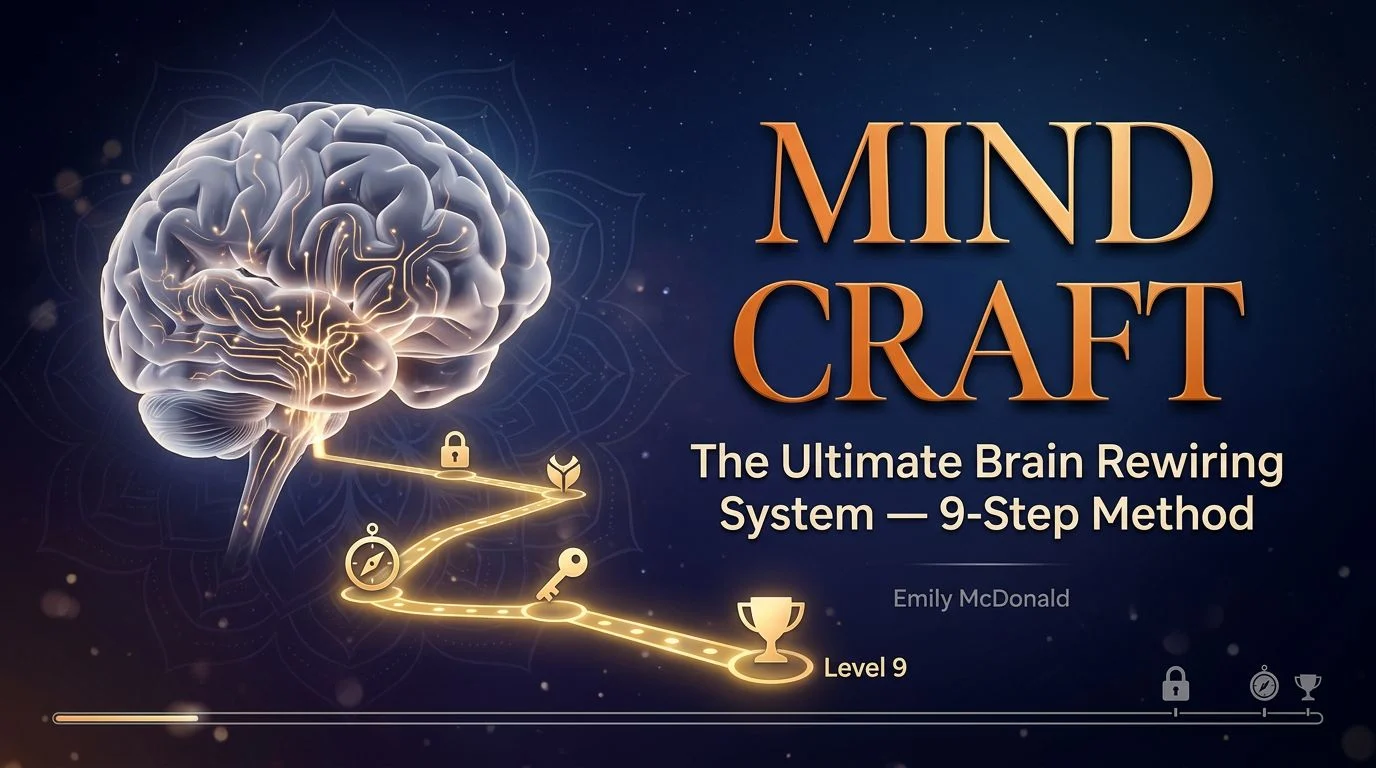
The program is organized around a 9-step method. The early steps cover how thoughts, beliefs, and subconscious patterns filter perception, and why the brain defaults to familiar loops even when they work against you. The middle steps move into rewiring: practices built to interrupt habitual thinking and lay down new patterns through repetition. This part leans on neuroplasticity, the brain’s documented capacity to reorganize itself with repeated practice. The later steps apply that rewiring to confidence and goal pursuit. McDonald frames the end state as a mindset where “success becomes effortless.” That’s her framing, not a measurable promise. What the program actually delivers is a structured mental practice routine you repeat until it sticks.
Who MindCraft Is For
The best fit is someone stuck in repetitive negative self-talk who wants a structured practice rather than scattered advice, and who is curious about manifestation but wants reasons behind the rituals. It’s not for anyone expecting fast external results. Mindset work in 2026 looks the same as it always has: slow, repetition-dependent, and easy to quit. And if you’ve done serious CBT work or read deeply on habit formation, parts of this will feel familiar. It is also not therapy, and it won’t substitute for clinical treatment.
How It Compares to Generic Manifestation Courses
Generic manifestation courses recycle law-of-attraction talking points and stop there. MindCraft’s differentiator is the mechanism layer: each practice comes with an explanation of what it’s supposed to be doing in the brain. Compared with Dr. Joe Dispenza’s meditation programs, which occupy similar territory, McDonald’s material is shorter, more beginner-friendly, and less ritual-heavy. Dispenza goes deeper on extended meditation practice. MindCraft is quicker to work through and easier to act on if you’re new to this space.
MindCraft: Common Questions Answered
What is MindCraft?
A 9-step method from neuroscientist Emily McDonald that combines neuroplasticity principles with manifestation practice to rewire subconscious thought patterns.
Who is MindCraft for?
People dealing with limiting self-talk or low confidence who want a structured, science-informed routine rather than pure spiritual content.
Is MindCraft legit?
On credentials, yes. McDonald is a trained neuroscientist, a Simon & Schuster-published author, and has been featured in The New York Times. Whether the manifestation framing suits you is a separate question.
Is it science or spirituality?
Both, by her own framing. The mechanisms come from brain science; the practices borrow from manifestation traditions.
Do results come quickly?
No. Rewiring habitual thinking takes consistent practice over weeks or months, and the program promises no specific life outcomes.
Is MindCraft Worth It?
If you want manifestation with a working explanation underneath it, this is one of the more credible options we’ve reviewed. The 9-step structure is easy to follow, the credentials are real, and the claims are the usual mindset-niche claims, so treat them as her framing and judge it on the practice itself.