One Million Academy is Mike Kimbrough’s Skool-based training for beginners and existing sellers who want to build a physical-product brand through TikTok Shop and Shopify. It combines recorded e-commerce material with mentorship and community support around product selection, content, customer acquisition, store optimisation and scaling. The purchase only makes sense once you separate sales volume from profit and understand how much capital the model can consume.
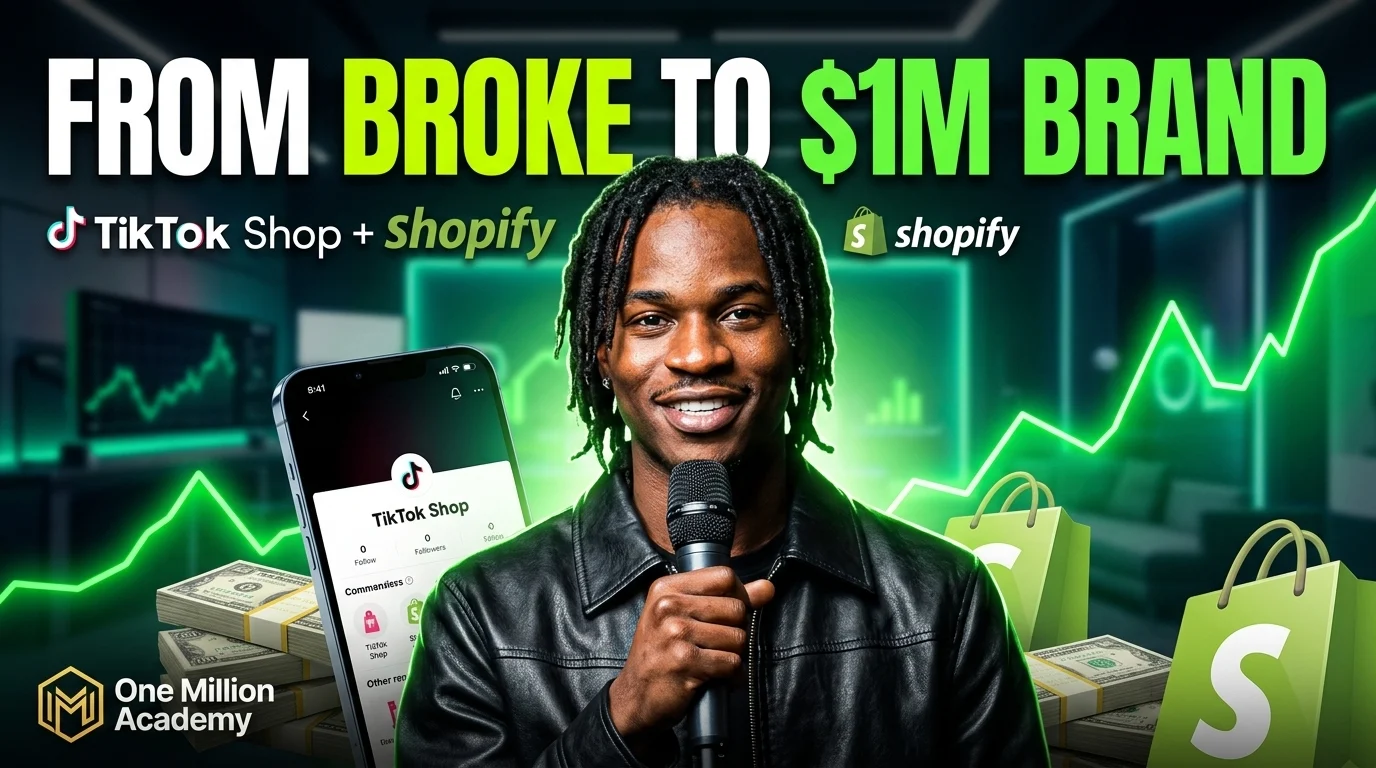
Mentorship, community participation and feedback depend on active enrolment with the original provider. Do not assume that private coaching or weekly calls are included because the listing does not specify them. What transfers independently is the recorded material, while the listing does not identify a template library.
Gross sales can climb while the store loses cash
Revenue is the customer’s checkout total, not the owner’s income. Begin with net sales after discounts, then subtract the landed cost of each product, platform and payment fees, advertising or creator commissions, shipping, fulfilment, returns and chargebacks. What remains is contribution profit. Software, wages, storage, professional services and taxes still sit below it.
A store can therefore grow quickly and lose money throughout the expansion. Advertising costs may rise as the audience broadens, returns reverse completed sales, and fast restocking can consume cash before previous orders have produced usable proceeds. Physical inventory makes this especially unforgiving. Money must be committed before a single sale, and unsold stock is not a pause in the business. It is capital at risk, often with storage and clearance costs attached.
Social commerce has several engines, not one trick
Organic creator-led selling uses demonstrations, stories and product education to earn discovery without paying for every impression. It reduces initial media exposure but demands sustained production, and platform reach remains unpredictable.
Affiliate creator seeding distributes products through commission-based partners. It can expand creative output, yet samples, commissions, attribution disputes and inconsistent brand presentation must enter the margin calculation.
Paid performance advertising buys controlled distribution and produces the clearest test data when tracking is sound. It is also the quickest route to scaling an unprofitable order if acquisition cost is compared with revenue rather than contribution profit.
Owned-store retention marketing uses email, customer service, bundles and repeat-purchase offers to earn more from acquired customers. Cohort retention and contribution margin provide stronger evidence here than follower growth.
Preorder and print-on-demand validation tests demand with less inventory exposure. The trade-offs are slower fulfilment, lower control and sometimes weaker margins, but the approach can protect limited starting capital.
A credible course should expose the unit economics
Ask whether a program teaches a landed-cost model, contribution profit, break-even acquisition cost and a cash-flow forecast tied to supplier lead times. Check whether product research includes demand durability, competition, return risk and minimum order quantities instead of trend screenshots alone. A useful curriculum should also distinguish platform-reported revenue from settled cash and profit.
Then inspect transferability. Does the method still work if organic reach falls, advertising costs rise or a marketplace restricts the account? Finally, request the support schedule, lesson dates, instructor feedback process and examples showing both unsuccessful tests and viable ones. Wins without cost ledgers are weak evidence.
The One Million Academy model links discovery with store ownership
One Million Academy places TikTok discovery beside a Shopify storefront rather than treating a viral product as the entire business. The listing names e-commerce fundamentals, product research, Shopify setup, TikTok Shop strategies, content creation, customer acquisition and scaling. It also discusses store structure, product pages, conversion optimisation, branding, customer experience and retention as parts of longer-term brand building.
That is broad coverage, not a detailed module map. The listing supplies no lesson duration, support calendar, required starting capital or supplier-vetting process. It describes compelling hooks, consistent content, creator partnerships and product positioning as important to TikTok Shop selling, but does not show how deeply each topic is taught.
Seller counts do not replace a profit ledger
Mike Kimbrough’s marketing claims that he has helped more than 1,000 students launch e-commerce brands and that 245 left their jobs using the system. These student-count and creator-performance statements are self-reported, not independently verified or audited. Taken entirely at face value, and using only the seller’s own numbers, the headline outcome is reported for under a quarter of claimed students.
The course title also uses an earnings framing, but store revenue is the number least connected to what an owner keeps. The FTC’s guidance on earnings claims is a useful standard: buyers need a reasonable basis and appropriate context for represented results. No audited profit evidence is supplied in the listing.
Inventory capacity and market eligibility set the boundary
Execution requires enough capital for stock, samples, fulfilment delays and returns, plus time to publish and evaluate short-form content consistently. Common failures include buying deeply before validation, mistaking views for purchase intent, scaling on gross revenue and depending on one platform for demand. TikTok Shop operates only in selected markets, so an ineligible reader cannot run the stated model. The listing notes that platform policies can change, but it does not address the geographic gate or the concentration risk of one algorithm.
Someone unwilling to risk stocked inventory may be better served by preorder and crowdfunding validation training. A seller with traffic but weak checkout performance should compare dedicated Shopify conversion-rate optimisation training. A founder outside supported TikTok Shop markets may need marketplace-independent customer acquisition training. Anyone unable to produce frequent demonstrations could start with short-form product-video training before buying a broader brand program.
Four details should decide the enrolment
- Which TikTok Shop markets does the current program support, and how is seller eligibility checked?
- How much of the experience is recorded, and what scheduled group, private or asynchronous feedback does active enrolment provide?
- Does product research include supplier checks, minimum orders, landed costs, return reserves and inventory cash flow?
- When were the TikTok Shop lessons last updated, and how are policy changes communicated through the Skool community?
Those answers determine whether the teaching matches your market, capital and need for current support more reliably than the headline positioning does.