Webcam Profits is Joe Lampton’s recorded business training for people considering a webcam model agency, whether managed remotely or developed into a physical studio. It addresses recruitment, platform accounts, operating systems, traffic, equipment, schedules, team building, and several named customer-management topics.
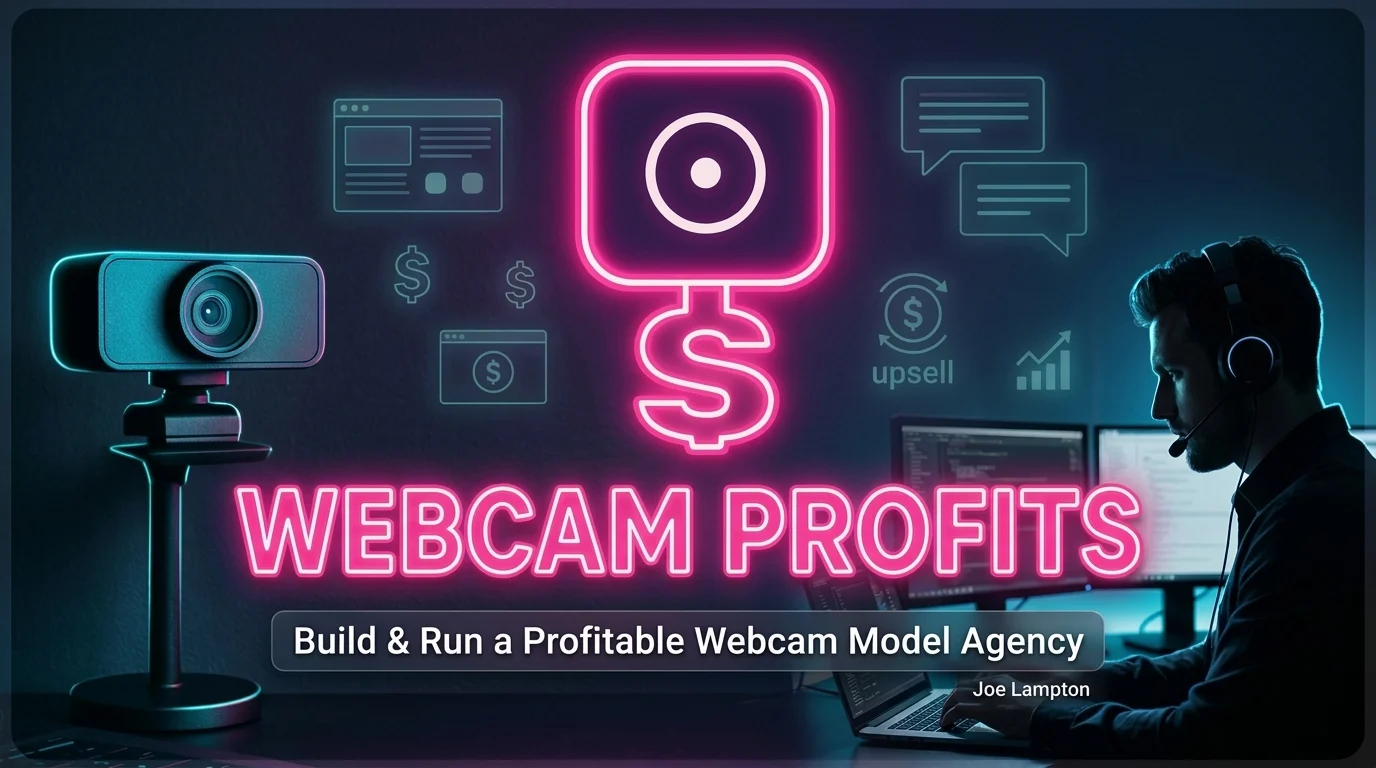
The listing names a Webcam Profits Community, but it does not specify personal coaching, weekly calls, or individual feedback. Any community benefit depends on active enrolment with the original provider and should not be assumed elsewhere; the clearly transferable material is the recorded framework and three eBooks.
Trust and records come before traffic
An adult-industry agency is a service business with unusually serious duties. Every performer must be a verified adult. In the United States, producers of covered sexually explicit depictions have identity, age-verification, and record-keeping obligations under 18 U.S.C. 2257, implemented by 28 CFR Part 75. Parts of this regime have been litigated, so a lawyer must advise on its current scope. Other countries have their own rules.
Consent, written payment terms, correct worker classification, and an effective right to stop or leave protect performers. When an agency controls accounts or income, exploitation and coercion become real risks. This is business education, not legal or accounting advice; use a qualified lawyer and accountant.
Agency value ends where performer control begins
A legitimate operator can reduce administrative load by arranging equipment, documenting workflows, coordinating approved schedules, monitoring platform requirements, and providing agreed business support. Recruitment therefore begins with a clear service proposition, transparent deductions, access rights, and an exit process. Retention comes from reliable payment, respectful communication, useful operational support, and promises the agency can actually keep.
Platform terms govern the business. Each webcam or subscription platform sets its own conditions for agencies, third-party account management, and customer communication. Each platform’s own terms decide who may manage an account and talk to customers. The honest limit is simple: traffic tactics cannot compensate for lost trust or noncompliance.
Remote management and studios carry different burdens
Remote agency management keeps premises costs lower, but makes equipment consistency, support, privacy, and supervision harder. Physical studio operations can centralize infrastructure and staff, while adding premises, employment, safety, and management obligations.
Platform-specific account operations develop depth in one platform’s rules and tools, but create concentration risk when policies change. Performer-led cooperative support gives performers greater control and shared services, though decision-making can be slower. Compliance-first agency training prioritizes contracts, consent, records, and classification before acquisition. Organic traffic training and paid traffic training address visibility, but neither proves that an agency model is fair or sustainable. Evidence here is primarily legal, contractual, platform-specific, and operational rather than comparative course trials.
Due diligence belongs in the operating documents
Before buying any program, ask to see the level of its operational work. A serious curriculum should explain who owns accounts, how access is revoked, how payments are documented, how consent changes are recorded, and what happens when a performer leaves. It should separate employee and contractor questions, direct you to jurisdiction-specific advice, and date its platform guidance.
Then inspect the teaching mechanism. Look for usable procedures, realistic exercises, platform-policy references, equipment decision criteria, and feedback from someone qualified to give it. Treat screenshots, testimonials, and creator earnings as seller-selected claims, not forecasts. Confirm whether community access is active, moderated, and essential to completing the material.
Joe Lampton connects remote operations to studio management
Webcam Profits sits across several families rather than specializing in one. Its seven hours of video and three eBooks cover recruiting and retaining models, selecting platforms, setting up accounts, and creating agency processes. The curriculum then names website analysis and customization, professional streams, hardware, organic and paid traffic, schedule optimization, bots and automation, customer psychology, chatting, storyline creation, upselling, tax strategies, managing unwanted online content, industry contacts, model visibility, and multiple income sources.
A later component covers moving from remote work to a physical studio, including location choice, infrastructure, equipment, employee recruitment, team organization, and internal systems. That breadth suits an orientation program. The listing does not establish how deeply each topic is taught or identify jurisdiction-specific professional input.
Scope is visible, effectiveness is not
Webcam Profits supplies a detailed topic map, a defined recording length, eBooks, and a named community. Those facts show breadth and format, not learner outcomes. The listing provides no independent comparison, completion data, sample operating document, or evidence that its traffic and retention methods outperform alternatives.
Any creator or student results encountered elsewhere remain seller-supplied claims and do not predict your result. Particularly sensitive subjects named in the curriculum require current advice from qualified professionals, while platform instruction can become dated whenever account or agency policies change.
Traffic cannot repair a weak performer relationship
Results require careful recruitment, documented agreements, dependable administration, policy monitoring, and enough time to support performers without taking away their control. Common failures include vague payment arrangements, shared credentials without safeguards, dependence on one platform, inconsistent equipment, and attempting studio expansion before remote processes work.
If your main gap is lawful contracts and classification, choose specialist adult-industry legal training with jurisdiction-specific counsel. If acquisition is the bottleneck, compare dedicated paid traffic training rather than expecting a broad agency course to provide channel mastery. Operators building premises may be better served by physical studio operations training. Performer-first teams should also examine cooperative business governance. This purchase makes least sense for anyone unwilling to accept performer autonomy, ongoing compliance costs, or changing platform rules.
Settle compliance and access questions first
Is the Webcam Profits Community currently active, moderated, and available with the version being offered?
How are the seven hours divided between demonstrations, strategy, legal cautions, and physical-studio planning?
Which platform lessons remain current, and does the provider date updates when agency or account-management rules change?
Do the eBooks contain actionable procedures and document examples, or mainly repeat the recordings?
The answers determine whether this is a usable operating foundation or simply a broad introduction to a sensitive agency model.