Proofreading becomes dependable when language judgment, controlled attention, and a disciplined workflow operate together. The useful question is not whether a course can help you spot typos. It is whether it develops repeatable decisions, realistic practice, and the service habits needed to handle documents responsibly.
Why accurate proofreading depends on process, not sharp eyes
Proofreading is the final quality-control stage after a document’s structure and argument are substantially settled. Its purpose is to catch surface errors, apply an agreed style, and identify inconsistencies without silently rewriting the author’s meaning. That boundary separates proofreading from deeper editing. Unnecessary intervention wastes time, complicates approval, and can introduce fresh errors.
Reliable proofreaders divide attention across spelling, grammar, punctuation, capitalization, headings, numbering, spacing, references, and internal consistency. They also manage versions, record style decisions, query genuine ambiguity, and deliver changes in the client’s expected format. Because attention deteriorates and familiarity hides mistakes, one intense read is weak protection. A staged workflow, supported by references and checklists, is stronger. Accuracy is a system.
The major methods and adjacent proofreading disciplines
Staged-pass proofreading separates language, formatting, and consistency checks, reducing the mental competition created by checking everything at once. Comparative proofreading checks a revised document against its source and is especially useful when omissions or unintended alterations matter. Reading aloud, text-to-speech, line isolation, and temporary font or layout changes disrupt visual familiarity. Backward reading can expose isolated spelling errors, but it destroys sentence context and cannot replace a normal pass.
Copyediting addresses clarity, usage, flow, and consistency at a broader level, so it suits work that is not ready for a final surface check. Developmental editing examines structure, argument, organization, and reader experience before sentence-level correction. Transcript and legal transcription proofreading demands specialized conventions, transcript formats, and tolerance for spoken-language irregularities. Style-guide training develops fast, defensible decisions through manuals, dictionaries, client sheets, and terminology lists. Freelance client-getting focuses on positioning, outreach, proposals, discovery conversations, and relationship management rather than language accuracy.
Digital spelling and grammar tools work best as filters because false positives and contextually wrong suggestions remain common. Checklists and personal error logs have a strong practical rationale: they externalize memory and target recurring mistakes. Timed drills may improve speed, while realistic documents followed by explained corrections provide better evidence of judgment. Strong comparative evidence favoring one commercial course format is limited.
How to test any proofreading program before enrolling
Begin with scope. A credible syllabus distinguishes proofreading from copyediting, identifies the document types used, and covers grammar, punctuation, formatting, consistency, style resources, queries, version control, and file delivery. Check whether you will correct substantial imperfect documents rather than merely watch demonstrations. Useful answer keys explain why a change is required, optional, or outside scope.
Next, inspect assessment. Ask whether unseen work is evaluated by a person, an automated system, or only through self-comparison, and whether mistakes receive actionable explanations. Confirm prerequisites, accessibility, instructor contact, update arrangements, delivery format, and community support. Freelance preparation should include scope agreements, sample edits, style sheets, ethical marketing, client communication, and workflow. A large archive or impressive lesson index proves volume, not teaching quality.
Where General Proofreading fits and why its title misleads
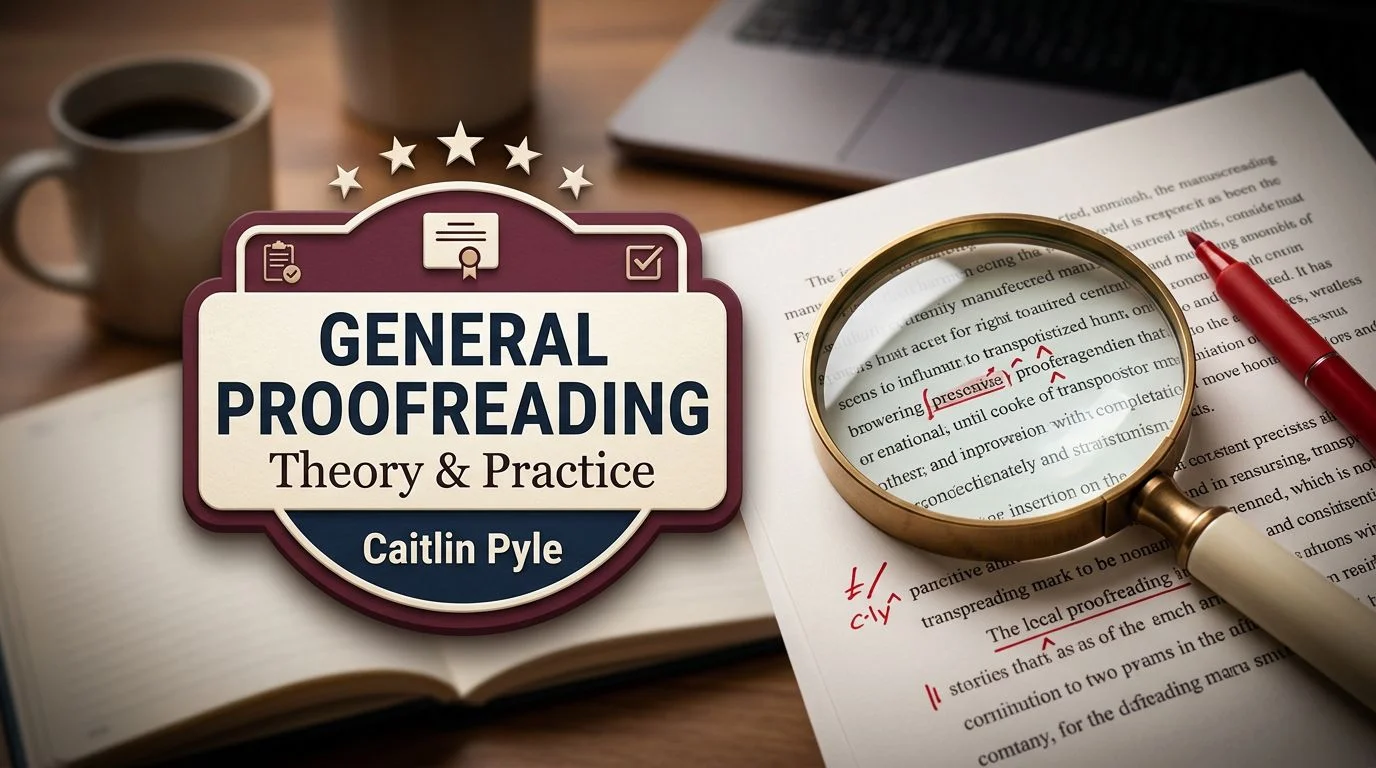
The title is a poor map of the contents. Research identifies Caitlin Pyle as the founder of Proofread Anywhere, which sells general and transcript proofreading as separate products. This listing, however, is a combined downloadable archive containing three named tracks: Ignite Plus general proofreading, transcript theory, and transcript marketing. A buyer expecting only broad document proofreading would therefore encounter a wider, partly specialized bundle.
The format matters. This is not described as a hosted classroom, and the researched archive provides no instructor access, grading, or community. Folder titles indicate attention to general proofreading, transcript conventions, and marketing, but no lesson file was opened during verification. Lesson quality, teaching duration, exercise depth, assessment standards, and exam grading consequently remain unconfirmed. General Proofreading appears broad in topic coverage, yet its capacity to build calibrated judgment cannot be established from its directory structure.
What the available evidence can and cannot establish
The archive confirms that categorized material exists. It does not demonstrate that explanations are accurate, exercises resemble paid assignments, feedback corrects misunderstandings, or learners become employable. No independent completion, accuracy, client, or career outcomes were supplied in the available research. Any student, audience, or earnings statements made by the creator should be treated as self-reported marketing claims rather than verified results.
The US Bureau of Labor Statistics occupational data for proofreaders and copy markers can help you understand the occupation’s formal classification, but it does not validate this archive. General Proofreading should be judged on inspectable instruction and assessment, not presumed outcomes.
What competence and freelance progress actually demand
Expect to practice regularly on varied documents, explain corrections, maintain a personal error log, and compare decisions against authoritative references. Freelance progress also requires clear scope, dependable turnaround, secure file handling, tactful queries, and consistent prospecting. Common failure points include passive viewing, overcorrecting, trusting software suggestions, practicing only familiar material, and mistaking course completion for market readiness.
If your main weakness is sentence-level clarity, you may be better served by dedicated copyediting training. If you struggle with document architecture, compare a developmental editing program instead. For court or deposition work, choose specialist transcript and legal transcription proofreading. If language skill is already strong but clients are scarce, prioritize structured freelance client-getting training. General Proofreading makes more sense for a self-directed learner comfortable evaluating an archive without instructor feedback.
Practical questions to settle before you choose
How do I know whether I need proofreading or copyediting? If the document’s meaning, flow, and sentences still need reshaping, it needs copyediting. Proofreading belongs after those issues are settled.
Can grammar software replace deliberate passes? No. It can flag possibilities, but you remain responsible for context, house style, consistency, and false positives.
What is the best evidence that I am improving? Track accuracy on unseen documents, classify your recurring errors, explain each intervention, and measure whether speed rises without judgment deteriorating.
Is this listing suitable if I need feedback and accountability? The researched format supplies neither verified grading nor instructor access. Choose a coached program with evaluated assignments if external correction is central to how you learn.