TL;DR: Design for Behavior Change is BJ Fogg, PhD’s official online course in his Behavior Design system, co-taught with Stephanie Weldy, MEd. It runs 8 modules and 75 short video lessons (about 5h50m), with 15 work-ready worksheets and tools built around the Fogg Behavior Model, B=MAP. Built for professionals who influence behavior at work.
Design for Behavior Change – Stanford Behavior Science, Applied at Work
Most “behavior design” content floating around the web in 2026 is a second-hand reading of one man’s research. This is the source. Behavior Design is BJ Fogg’s own course in the system he taught for 15-plus years, largely to Stanford students, before releasing it publicly. The promise is narrow and honest: stop guessing how to move people, and apply a named, repeatable method to real work.
It is co-taught with Stephanie Weldy, MEd, a longtime Fogg collaborator who runs Behavior Design workshops in industry. Fogg brings the framework; Weldy keeps it grounded in how teams actually use it.
What Is Inside the Course – The 8 Modules
The structure is practical, not academic. The 8 modules move from a working overview of Fogg Behavior Design and the Fogg Behavior Model, through how motivation and ability interact and Fogg’s step-by-step methods, into team-facing work: focusing a group on the behaviors that matter, the Fogg Maxims, designing for habits and customer engagement, and turning it into a daily practice.
We checked the curriculum ourselves: 75 lessons averaging roughly five minutes each, plus 15 worksheets, templates, scripts, and digital tools, and a completion certificate. The short-lesson format keeps each idea in apply-it-today chunks instead of hour-long lectures.
Who Behavior Design Is For
This is a B2B-leaning, work-application course, and that focus is its strongest edge. Product managers use B=MAP for engagement and retention, marketers map it to conversion, and UX designers, the kind who sharpen their craft with Matt Smith’s Shift Nudge interface design training, use it to shape what users actually do. Employee-wellness leaders, founders, and behavior-change consultants get a repeatable method for sticky behavior rather than one-off nudges.
You do not need a psychology or design background; the course builds from a plain overview upward. The honest counterpoint: if you want a personal-habit course, the Tiny Habits book fits better, since this one is aimed at organizations. It pairs naturally with a structured program like Robin Sharma’s HabitCamp for turning the science of habit formation into a daily routine.
About BJ Fogg, PhD – Why the Authority Is Real
This is where Behavior Design separates from the field. BJ Fogg has directed the Behavior Design Lab at Stanford University since 1995, created the Fogg Behavior Model (B=MAP), and wrote the New York Times bestseller Tiny Habits – all confirmable through the Stanford Behavior Design Lab. That primary-source pedigree pairs well with the daily work habits taught in Ali Abdaal’s Productivity Lab.
Our Take on Behavior Design
Behavior Design is rare primary-source authority. In the absence of public testimonials, the proof is the work itself and the source behind it: 8 modules, roughly 75 short lessons and 15 work-ready tools, taught by the creator of the Fogg Behavior Model who has led Stanford’s Behavior Design Lab since 1995 and authored the NYT bestseller Tiny Habits. You learn B=MAP from the person who named it, not someone else’s summary – which is why it suits a professional who has to move behavior at work in 2026.
Behavior Design – Common Questions Answered
What is Behavior Design?
It is BJ Fogg, PhD’s official online course teaching his Behavior Design system, B=MAP, applied to work projects. It is co-taught with Stephanie Weldy, MEd, across 8 modules, 75 lessons, and 15 tools.
Who is this course for?
Product managers, marketers, UX and interaction designers, employee-wellness leaders, founders, and behavior-change consultants. No design or psychology background is required.
Is Behavior Design worth it?
For anyone whose job depends on influencing behavior, yes. The deliverables are concrete and verifiable: 8 modules, 75 short video lessons (about 5h50m total, roughly five minutes each), 15 work-ready worksheets, templates, scripts, and digital tools, and a completion certificate. With Behavior Design you learn the B=MAP method directly from the person who created it – not a second-hand summary – which is what justifies the price tier in 2026.
Is Behavior Design legit?
Yes, and the proof is checkable rather than promotional. This is the official course of Fogg’s Behavior Design system. BJ Fogg, PhD directs the Stanford Behavior Design Lab and has been affiliated with Stanford since 1995; he created the Fogg Behavior Model (B=MAP); and he wrote the New York Times bestseller Tiny Habits. Every one of those claims can be confirmed through the Stanford Behavior Design Lab directly.
What is the Fogg Behavior Model (B=MAP)?
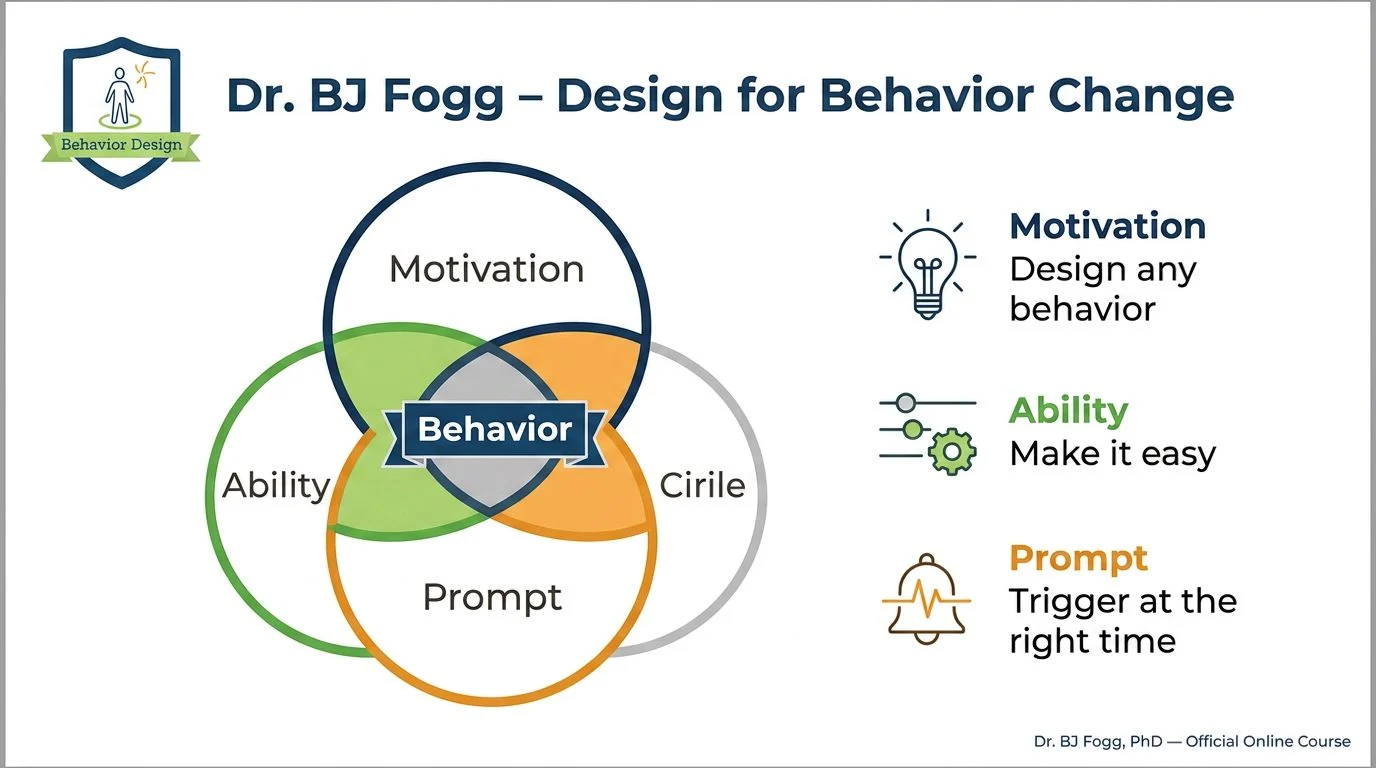
Behavior equals Motivation plus Ability plus Prompt; all three must converge for a behavior to happen. It is the core framework the course teaches you to apply.
How is this different from the Tiny Habits book?
Tiny Habits focuses on personal habit formation. This course applies Fogg’s full Behavior Design system to work projects, teams, and products.