
TL;DR: Break Into DevOps In 2026 is a self-paced, seven-module roadmap that takes complete beginners from DevOps fundamentals through Linux, cloud, Docker, Kubernetes, CI/CD, and Terraform, then finishes with a career-prep module covering portfolios, resumes, and interviews. It is a structured skills path, not a promise of a job.
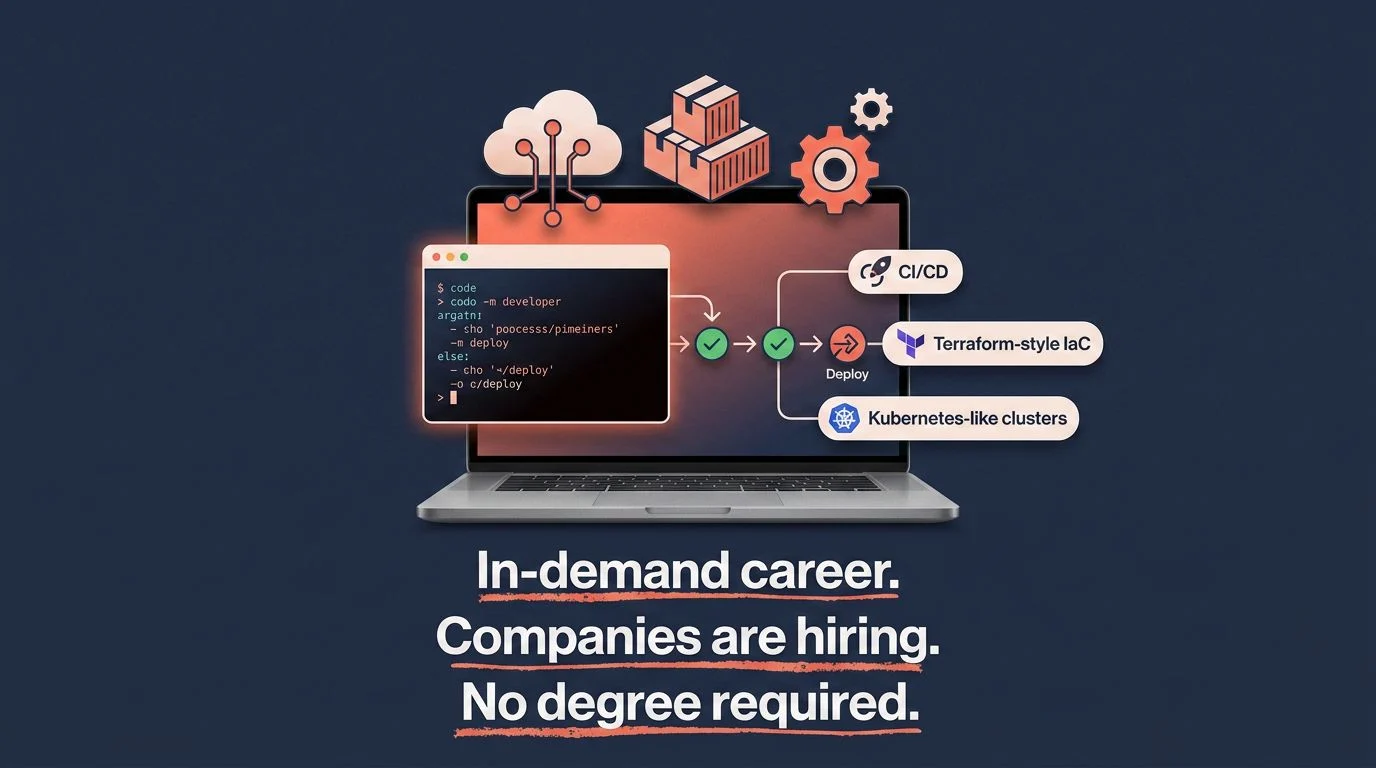
Break Into DevOps In 2026: Zero To Engineer Roadmap
Break Into DevOps In 2026 answers a problem most beginners know well. A Linux video here, a Docker tutorial there, a half-finished Kubernetes playlist, and no idea what to study next. Unstructured self-study has a brutal dropout rate, and the reason is rarely effort. It is sequencing.
This roadmap fixes that by putting the whole path in one place and in the right order. It covers DevOps fundamentals, Linux, cloud infrastructure, containers, CI/CD, and Infrastructure as Code, then ends with career preparation. It is built for beginners, IT professionals, and developers who want a guided route into DevOps skills. The promise is a structured path, not a hiring outcome.
What Is Inside The Roadmap
Verified contents of the roadmap, drawn from the course listing:
- Seven progressive modules, sequenced from fundamentals to job-readiness skills.
- Self-paced, on-demand video and reading material across the full beginner DevOps path.
- A hands-on, project-led approach rather than theory alone.
- A dedicated career-preparation module with portfolio, resume, and interview guidance.
The format is self-paced and online, with no live instructor and no fixed cohort schedule. Any completion certificate is a course completion certificate only, not a vendor credential such as AWS, CKA, or Linux Foundation.
Complete Course Breakdown
To see how the modules connect:
- DevOps Fundamentals: DevOps culture, the software development lifecycle, and an intro to automation.
- Linux and Command Line Skills: Linux environments, file systems, permissions, shell commands, and basic server administration.
- Cloud Computing and Infrastructure: cloud platforms, virtual machines, networking, storage, and provisioning basics.
- Containers and Orchestration: Docker fundamentals, container workflows, Kubernetes basics, and managing containerized apps.
- CI/CD Pipelines and Automation: integration and deployment concepts, tools such as Jenkins or GitHub Actions, and automated testing.
- Infrastructure as Code (IaC): Terraform and configuration management basics, reproducible environments, and automated provisioning.
- Career Preparation and Job Readiness: building DevOps projects and portfolios, resume and interview prep, and real-world job expectations.
Networking is folded into the cloud module. Git and monitoring are covered as topics across the roadmap rather than as standalone modules.
Who Should Take This Roadmap
The curriculum is one thing. Whether this path fits you is another. It works best for a few specific starting points:
- Career-changers entering tech: you want one ordered path, not guesswork.
- IT professionals: you already work in tech and want to move toward cloud and automation roles.
- Developers: you write code and want to understand infrastructure, deployment, and pipelines, the same production mindset taught in Claude Code for Real Engineers.
- Students: you are preparing for entry-level DevOps positions and need a structured start.
Be honest about fit. If you are an advanced engineer after specialized enterprise architecture training, this is not it.
How This Roadmap Compares To Other Training Options
The next question is how it compares, and each option makes a trade-off. KodeKloud runs strong hands-on interactive labs, but it is a recurring subscription. Nana Janashia’s IT Fundamentals course from TechWorld with Nana builds the underlying foundation first, though it focuses on groundwork rather than the full DevOps toolchain. Boot.dev takes a gamified route through backend and DevOps skills, which keeps engagement high but does not suit every learner.
There is also the free community roadmap at roadmap.sh, a useful reference. The catch is that it is a map only. It does not teach the topics, sequence the lessons, or hand you guided projects. The case for this paid roadmap rests on one thing: structure and sequencing in a single place, self-paced, at a one-time price instead of an ongoing subscription. Among the beginner training paths we review, few combine that ordered curriculum with hands-on projects at a single one-time cost, which is what makes it worth a serious look for self-directed learners.
Frequently Asked Questions
What is Break Into DevOps In 2026?
It is a self-paced, seven-module beginner roadmap. The path covers DevOps fundamentals, Linux, cloud infrastructure, containers, CI/CD, and Infrastructure as Code, then closes with a dedicated career-preparation module covering portfolios, resumes, and interview prep for entry-level roles.
Who is this roadmap designed for?
Beginners moving into tech, IT professionals shifting toward cloud and automation roles, and developers who want infrastructure and deployment skills. It is not built for advanced enterprise specialists.
Is this roadmap worth it?
If you want one sequenced path instead of scattered tutorials, the structure carries real value, and a one-time price compares well against recurring subscriptions. Be realistic: DevOps has a genuine learning curve and needs practice beyond the videos.
Is this roadmap legit?
It is a defined seven-module curriculum with self-paced material, listed here on UDCourse. There is no named instructor and no buyer reviews yet, so judge it on the curriculum and the honest expectation-setting.
How long does this roadmap take to complete?
It is self-paced, so timing depends on your schedule and background. Comparable beginner roadmaps tend to run roughly five to eight months part-time.
Will it get me a job?
No course can promise that. This one builds job-ready skills and a portfolio and includes resume and interview prep, but it does not arrange or assure employment. Outcomes depend on you, your location, and your experience.
The Bottom Line On Break Into DevOps
In our review, this roadmap earns its place as a structured, self-paced, seven-module path from fundamentals through cloud, containers, CI/CD, and Infrastructure as Code into job-readiness skills. Among the beginner DevOps roadmaps we cover on UDCourse, its strongest case is sequencing. If scattered tutorials have stalled you before, this is the guided alternative, and we judge it best for self-directed beginners who will commit to practice between modules.