More than 40 million american adults take online courses each year, yet high tuition costs still keep many from reaching their educational goals. Affordable learning platforms are changing this story by breaking down financial barriers and opening doors to quality learning for everyone. With features like flexible scheduling, self-paced options, and accessible content, you gain practical skills without emptying your wallet or sacrificing your busy routine.
Key Takeaways
Point
Details
Affordable Learning Platforms
These platforms utilize digital technologies to increase educational accessibility, offering low-cost courses and flexible learning opportunities.
Diverse Learning Models
The evolution of affordable learning includes self-paced courses, hybrid models, and open educational resources, catering to varying learner preferences.
Bulk Course Purchasing
This approach enables groups of learners to negotiate discounts for premium online courses, making high-quality education more affordable.
User Benefits
Affordable learning platforms provide personalized learning paths, 24/7 accessibility, and community engagement, enhancing the overall educational experience.
Defining Affordable Learning Platforms
Affordable learning platforms represent a transformative approach to education that leverages digital technologies to democratize access to knowledge. According to research from Digital Pedagogy, these platforms aim to enhance educational accessibility by utilizing contemporary digital technologies applicable across online, hybrid, and traditional learning environments.
At their core, affordable learning platforms are digital ecosystems designed to reduce financial barriers to skill development and professional growth.
They typically offer courses, training materials, and educational resources at significantly lower cost than traditional academic institutions. As research from International Journal of Educational Development highlights, these platforms address critical challenges in traditional education systems by providing flexible learning opportunities that transcend geographical and economic constraints.
Key characteristics of affordable learning platforms include:
Low-cost course offerings
Flexible learning schedules
Global accessibility
Diverse educational content across multiple disciplines
Self-paced learning options
Interactive and engaging digital learning experiences
Affordable learning models have evolved significantly, offering diverse approaches to making education accessible and cost-effective. One prominent model is the flex model, which Wikipedia describes as a teaching method where learning materials and instructions are provided online, enabling students to work independently at their own pace with on-site teacher support as needed.
These learning models typically encompass several key categories that address different learner needs and preferences:
Self-Paced Online Courses: Completely digital learning experiences
Hybrid Learning Models: Combining online and in-person instruction
Open Educational Resources: Freely accessible learning materials
Subscription-Based Learning Platforms: Monthly access to comprehensive course libraries
Another innovative approach is the open textbook model, which Wikipedia explains as a method of providing freely accessible and openly licensed educational materials that serve as affordable alternatives to traditional textbooks.
Discover more about developing effective learning paths for skill growth to maximize your educational journey and minimize costs.
How Bulk Course Purchasing Works
Bulk course purchasing is an innovative approach to democratizing education by aggregating learner demand to negotiate significant discounts on premium online courses. Similar to how e-ShodhSindhu provides academic institutions with affordable access to electronic resources, this model enables individual learners to access high-quality educational content at dramatically reduced prices.
The bulk purchasing mechanism typically follows these strategic steps:
Community Aggregation
Collective group of learners interested in specific courses
Pooling purchasing power to negotiate lower prices
Minimum participant threshold required
Course Negotiation
Direct negotiations with course creators
Bulk purchase agreements
Significant price reductions compared to individual pricing
Affordable learning platforms are revolutionizing education through innovative technological features that enhance user experience and learning outcomes. ArXiv research highlights the emergence of AI-powered socio-technical systems designed to make online learning more accessible, achievable, and engaging through advanced support technologies like virtual teaching assistants.
Key features that distinguish these platforms include:
Personalized Learning Paths
24/7 Accessibility
Interactive Course Materials
Progress Tracking
Community Engagement Tools
Mobile-Friendly Interfaces
Research from the Journal of Interactive Media in Education emphasizes the importance of context-sensitive content delivery and social learning opportunities that foster ubiquitous access and community engagement. These platforms transform traditional learning by providing flexible, interactive experiences that adapt to individual learning styles and professional needs.
User benefits extend beyond traditional educational models, offering unprecedented flexibility and affordability. Discover how our comprehensive courses can accelerate your skill development and unlock new professional opportunities with minimal financial investment.
Comparing Alternatives and Common Pitfalls
Navigating the landscape of affordable learning platforms requires a critical understanding of their strengths and potential limitations. A systematic literature review from ArXiv reveals key challenges in implementing open learning analytics tools, highlighting the complexity of creating truly effective digital learning environments.
Common alternatives to affordable learning platforms include:
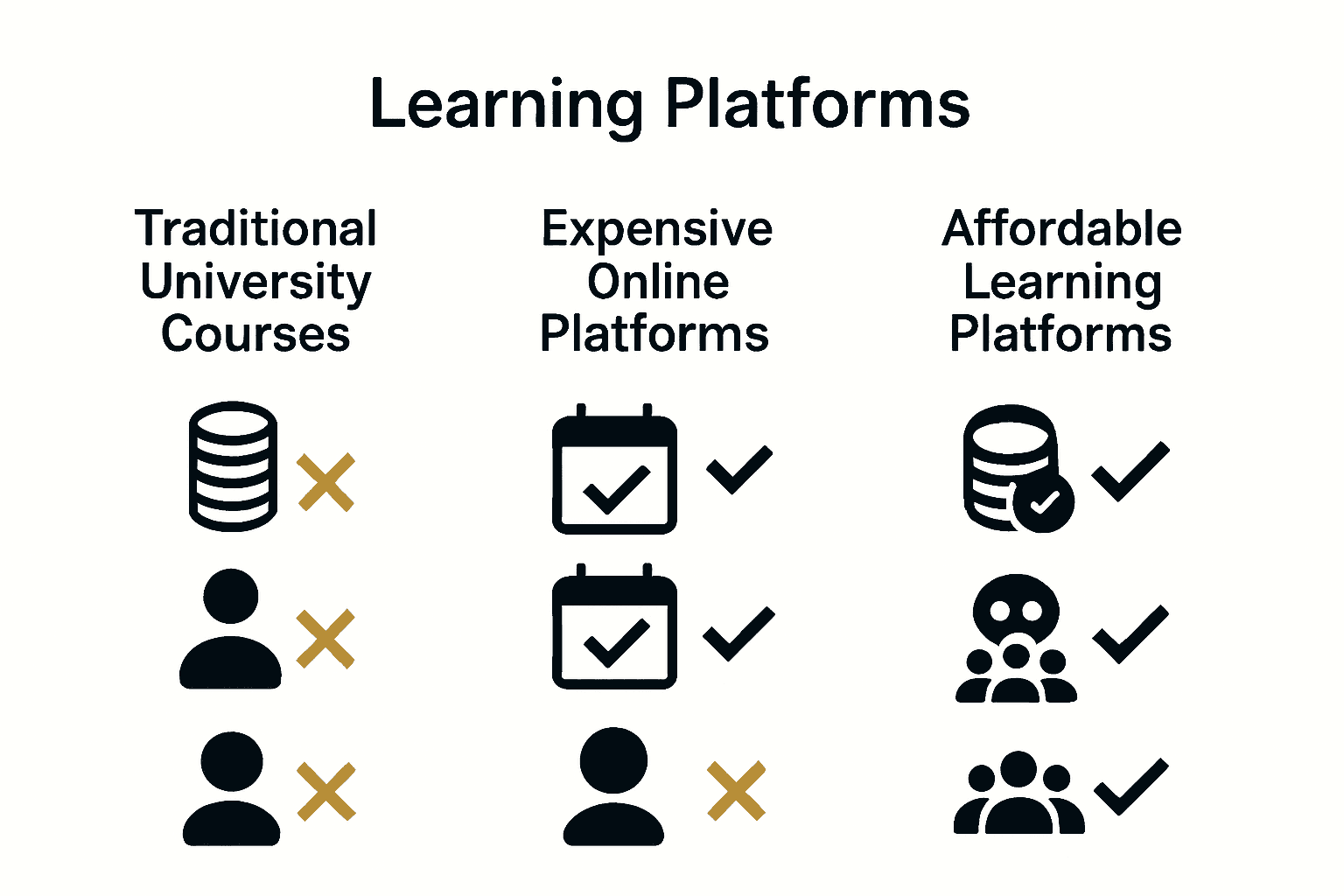
Traditional University Courses
High cost
Rigid scheduling
Limited flexibility
Expensive Online Learning Platforms
Premium pricing
Less personalized content
Limited community interaction
Free YouTube Tutorials
Inconsistent quality
No structured learning path
Lack of professional certification
Potential pitfalls learners should watch for include:
Inadequate course quality
Limited instructor interaction
Unclear learning outcomes
Lack of accreditation
Technical infrastructure challenges
Research from MDPI emphasizes the importance of open development and access while highlighting critical challenges like quality assurance and technological infrastructure. Learn more about choosing the right learning platform for your goals.
Unlock Affordable Learning With UDCourse Today
The challenge with affordable learning platforms is finding high-quality courses that truly fit your budget without sacrificing value. This article highlights the impact of bulk course purchasing and community-powered models on reducing costs while enhancing access and flexibility. If you are seeking to overcome the barriers of high pricing, rigid schedules, or unclear outcomes, you need a solution that offers premium content at prices you can afford.
UDCourse brings these concepts to life by negotiating bulk discounts on premium courses from official sources. You get lifetime access, free updates, and instant downloads across diverse fields such as marketing, AI, IT, and business growth. With its community-driven approach, you are not just saving money but also joining a network of motivated learners transforming their careers. Discover how to maximize your skill development with affordable options today.
Ready to seize the power of affordable premium courses with trusted lifetime access?
Explore curated courses and exclusive discounts now at UDCourse. Learn why thousands choose affordable online education and how you can benefit from bulk purchasing discounts. Accelerate your learning journey and join a community that supports your growth at UDCourse. Your future skills are just a click away.
Frequently Asked Questions
What are affordable learning platforms?
Affordable learning platforms are digital ecosystems that provide access to educational courses and resources at significantly lower costs compared to traditional educational institutions. They leverage digital technologies to enhance educational accessibility and accommodate online, hybrid, and traditional learning environments.
How do bulk course purchasing options work?
Bulk course purchasing involves aggregating a group of learners to negotiate significant discounts on online courses. By pooling financial resources, participants can access premium educational content at dramatically reduced prices through collective bargaining with course creators.
What are the key features of affordable learning platforms?
Key features of affordable learning platforms include personalized learning paths, 24/7 accessibility, interactive course materials, progress tracking, community engagement tools, and mobile-friendly interfaces, all designed to enhance user experience and learning outcomes.
What are the potential pitfalls of using affordable learning platforms?
Common pitfalls include inadequate course quality, limited instructor interaction, unclear learning outcomes, lack of accreditation, and potential technical infrastructure challenges. Learners should carefully evaluate these aspects to ensure they choose a quality learning experience.
Brandon Mitchell is a Course Research Specialist at Udcourse. With 6 years of experience in digital learning, he focuses on identifying and reviewing high-quality online programs from verified instructors to ensure every course meets Udcourse’s quality standards.